


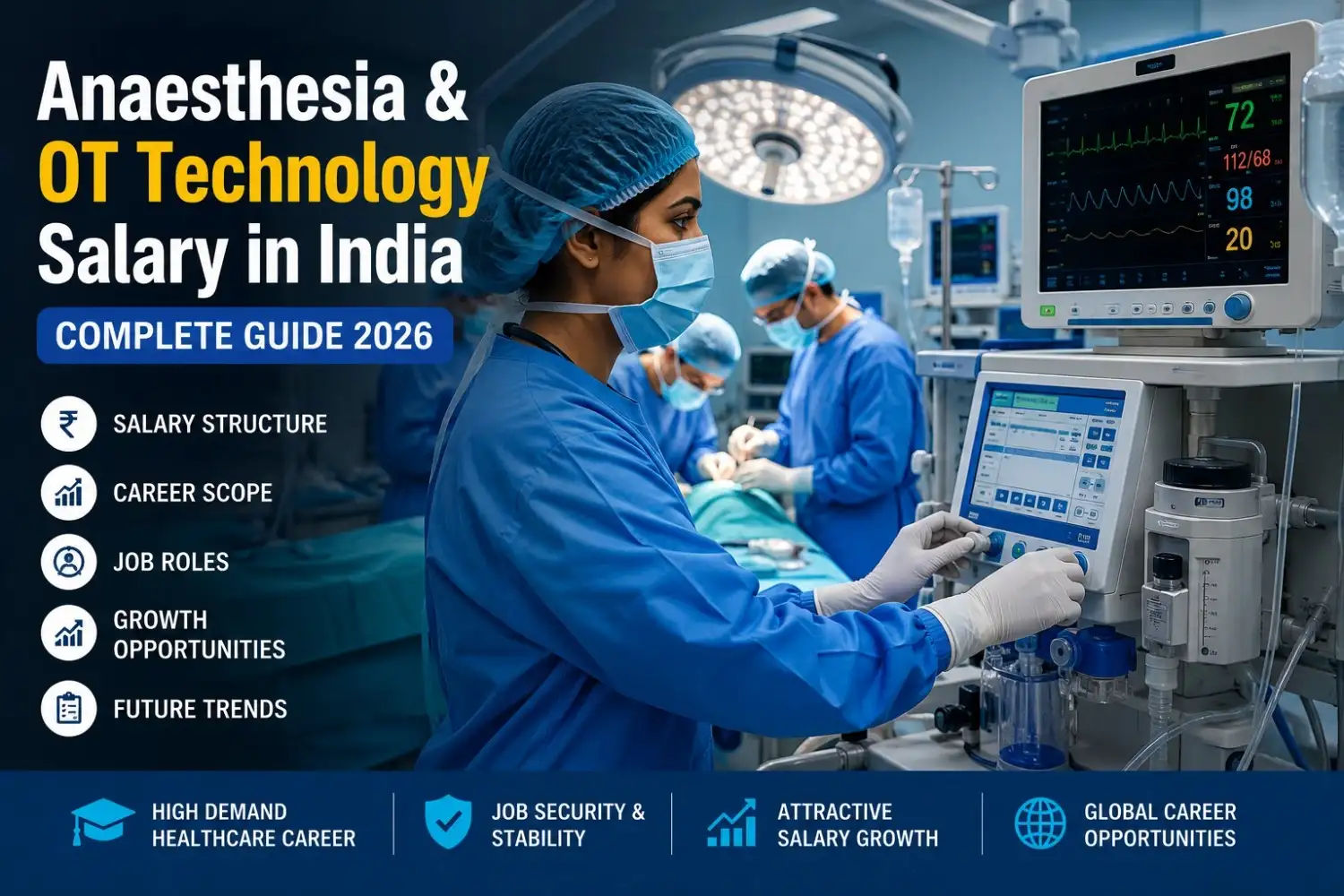
Anaesthesia & OT Technology Salary in India: Complete Guide 2026
Healthcare careers are evolving rapidly, and many students are now exploring professional programs beyond traditional medicine and nursing. One of the fastest-growing options is Anaesthesia and Operating Theatre (OT) Technology.
If you are considering this field, one question is likely on your mind:
How much salary can you earn in Anaesthesia & OT Technology in India in 2026?
The answer depends on several factors, including qualification level, experience, hospital type, location, specialisation, and technical skills.
This comprehensive guide covers everything you need to know about salaries, career growth, job opportunities, future trends, and strategies to build a successful career in Anaesthesia and OT Technology.
Students exploring healthcare career options may also benefit from the career guidance resources available on Vidya Udbhav, including healthcare programs, admission guidance, and professional development pathways.
Quick Answer: Anaesthesia & OT Technology Salary in India 2026
| Fresher | ₹18,000 – ₹35,000 | ₹2.2 – ₹4.2 LPA |
| 1–3 Years | ₹30,000 – ₹50,000 | ₹3.6 – ₹6 LPA |
| 3–5 Years | ₹45,000 – ₹70,000 | ₹5.4 – ₹8.4 LPA |
| 5–10 Years | ₹70,000 – ₹1.2 Lakh | ₹8.4 – ₹14 LPA |
| Senior Specialist | ₹1.2 Lakh+ | ₹14 LPA+ |
Featured Snippet Answer:
Anaesthesia & OT Technology professionals in India can earn between ₹18,000 and ₹35,000 per month as freshers in 2026. Experienced professionals working in multispecialty hospitals, corporate healthcare chains, and specialised surgical centres can earn over ₹1 lakh per month.
Understanding Anaesthesia & OT Technology
Anaesthesia and OT Technology is a specialised healthcare discipline focused on assisting anaesthesiologists and surgeons during surgical procedures.
Professionals in this field ensure:
- Safe administration of anaesthesia
- Monitoring patient vitals
- Preparing operating theatres
- Managing surgical equipment
- Supporting emergency procedures
- Maintaining infection control standards
They play a critical role in successful surgeries and patient safety.
Why Demand for Anaesthesia & OT Technologists Is Increasing
The healthcare sector is expanding significantly worldwide.
Several factors are driving demand:
Growing Number of Hospitals
Private hospitals, speciality centres, and healthcare chains continue to expand across India.
Increase in Surgical Procedures
Advancements in medical science have increased the number of surgeries performed every year.
Aging Population
As populations age, demand for surgeries and critical care services increases.
Medical Tourism
India remains a leading destination for affordable and high-quality medical treatment.
Technological Advancement
Modern operation theatres require skilled professionals trained in advanced equipment and patient monitoring systems.
What Does an Anaesthesia & OT Technologist Do?
A professional in this field performs several important responsibilities.
Before Surgery
- Prepare OT equipment
- Sterilize instruments
- Check anaesthesia machines
- Arrange medications
- Prepare patient records
During Surgery
- Assist anaesthesiologists
- Monitor vital signs
- Operate OT equipment
- Support surgical teams
- Handle emergency situations
After Surgery
- Shift patients safely
- Monitor recovery equipment
- Clean and prepare OT for the next procedure
- Maintain documentation
Salary Factors That Influence Earnings
Not all professionals earn the same salary.
Several factors affect income levels.
Qualification
Higher educational qualifications often lead to better salaries.
Examples:
- Diploma in OT Technology
- B.Sc. Anaesthesia & OT Technology
- Bachelor's in Operation Theatre Technology
- Master's Degree
- Specialized Certifications
Experience
Experience remains one of the strongest salary drivers.
A professional with five years of surgical experience can earn significantly more than a fresher.
Location
Metropolitan cities generally offer higher salaries.
Examples include:
- Delhi
- Mumbai
- Bengaluru
- Hyderabad
- Chennai
Hospital Type
Corporate hospitals often provide better compensation packages than smaller healthcare facilities.
Specialization
Specialised expertise can significantly increase earning potential.
Examples include:
- Cardiac Surgery
- Neuro Surgery
- Critical Care
- Trauma Care
- Pediatric Surgery
Salary Based on Qualification
Diploma Holders
Entry-level diploma graduates generally earn:
₹18,000–₹28,000 per month
Bachelor's Degree Holders
Graduated with a B.Sc. Anaesthesia & OT Technology can earn:
₹25,000–₹45,000 per month
Postgraduate Professionals
Professionals with advanced training often earn:
₹50,000–₹1,00,000+ per month
Salary Based on Workplace
Government Hospitals
Benefits include:
- Stable employment
- Pension benefits
- Healthcare benefits
- Career progression
Average salary:
₹30,000–₹80,000 per month
Private Hospitals
Compensation depends on hospital reputation and experience.
Average salary:
₹25,000–₹1,20,000 per month
Multispecialty Hospitals
Often provide some of the best salary packages.
Average salary:
₹40,000–₹1,50,000 per month
Medical Colleges
Teaching and clinical roles offer additional growth opportunities.
Career Scope After Anaesthesia & OT Technology
Many students assume career options are limited.
That is far from reality.
Career Opportunities Include
- OT Technician
- Anaesthesia Technician
- Surgical Assistant
- Critical Care Technician
- ICU Technician
- Emergency Care Technician
- Hospital Administrator
- Clinical Trainer
- Healthcare Consultant
Students looking for broader healthcare career planning can explore healthcare career resources and admission guidance available through Vidya Udbhav.
Step-by-Step Career Roadmap
Step 1: Complete 12th Science
Subjects usually include:
- Physics
- Chemistry
- Biology
Step 2: Pursue a Relevant Degree
Options include:
- B.Sc. Anaesthesia Technology
- B.Sc. Operation Theatre Technology
- Allied Health Science Programs
Step 3: Clinical Training
Hands-on exposure is essential.
Step 4: Gain Experience
Work in:
- Hospitals
- Surgical Centers
- Trauma Centers
- Emergency Departments
Step 5: Obtain Certifications
Additional certifications improve employability and salary.
Step 6: Specialise
Choose advanced fields such as:
- Cardiac OT
- Neuro OT
- Critical Care
Benefits of Choosing Anaesthesia & OT Technology
High Demand
The healthcare sector continuously requires trained professionals.
Strong Job Stability
Healthcare remains one of the most recession-resistant industries.
Multiple Career Paths
Professionals can work in clinical, educational, or administrative roles.
Fast Career Growth
Experience and specialisation can significantly increase earnings.
Global Opportunities
Many countries recruit skilled allied healthcare professionals.
Challenges in This Profession
Every career comes with challenges.
Long Working Hours
Emergency surgeries may require extended shifts.
High Responsibility
Patient safety depends on the precise execution of duties.
Emotional Pressure
Handling critical patients requires mental resilience.
Continuous Learning
Healthcare technology evolves rapidly.
Practical Solutions for Career Success
Build Technical Expertise
Learn advanced OT equipment and monitoring systems.
Improve Communication Skills
Effective teamwork is crucial in surgical environments.
Focus on Certifications
Certifications often lead to better opportunities.
Stay Updated
Keep learning about emerging surgical technologies.
Real-Life Career Growth Example
Consider a student who graduates in 2026 with a B.Sc. in Anaesthesia & OT Technology.
Year 1
Joins a hospital as an OT Technician.
Salary:
₹25,000 per month
Year 3
Develops expertise in cardiac surgeries.
Salary:
₹45,000–₹60,000 per month
Year 6
Becomes a senior OT specialist.
Salary:
₹80,000–₹1,20,000 per month
Year 10
Moves into management or specialised healthcare leadership.
Salary:
₹15–20 LPA or higher
Case Study: From Fresher to Specialist
A graduate from a healthcare institution joins a multispecialty hospital.
Initially responsible for OT preparation, they gradually gain experience in advanced surgical procedures.
After obtaining critical care certifications and cardiac OT specialisation, they move into senior roles with significantly higher compensation.
This growth path is increasingly common in modern healthcare systems.
Useful Tools and Technologies Used in OT Departments
Beginner-Friendly Tools
- Patient Monitoring Systems
- Pulse Oximeters
- ECG Machines
Advanced Technologies
- Anaesthesia Workstations
- Ventilators
- Defibrillators
- Surgical Imaging Systems
Premium Healthcare Technologies
- Robotic Surgery Platforms
- AI-Assisted Monitoring Systems
- Integrated Digital Operation Theatres
Beginner Strategy for Maximum Salary Growth
If you are just starting, focus on:
- Building strong clinical fundamentals
- Completing internships seriously
- Learning emergency care procedures
- Improving communication skills
- Seeking hospital exposure early
One thing many beginners miss is the importance of hands-on training. Employers often prioritise practical competence over theoretical knowledge.
Advanced Strategy for Experienced Professionals
Professionals aiming for higher salaries should:
- Pursue specialized certifications
- Gain leadership experience
- Learn healthcare management
- Develop critical care expertise.
- Participate in clinical training programs.
This becomes more important when competing for senior roles in large healthcare organisations.
Common Mistakes to Avoid
Ignoring Clinical Exposure
Practical experience matters enormously.
Avoiding Certifications
Certifications can significantly improve earning potential.
Neglecting Soft Skills
Healthcare is a team-oriented profession.
Limiting Learning
Technology changes rapidly.
Focusing Only on Salary
Long-term career growth often matters more than initial earnings.
Expert Tips for Faster Career Growth
Build a Professional Network
Connect with surgeons, anaesthesiologists, and healthcare leaders.
Document Clinical Experience
Maintain records of procedures and training.
Learn Emergency Protocols
Emergency expertise is highly valued.
Pursue Continuous Education
The most successful professionals remain lifelong learners.
Stay Patient
Career growth in healthcare compounds over time.
Best Practices for Success in Anaesthesia & OT Technology
- Follow infection control protocols.
- Maintain equipment knowledge
- Prioritise patient safety
- Improve teamwork abilities
- Develop problem-solving skills
- Stay updated with healthcare regulations.
Future Trends in Anaesthesia & OT Technology
The profession is expected to grow substantially over the next decade.
Emerging trends include:
Smart Operation Theatres
Digitally integrated surgical environments.
Robotic Surgery
Increasing demand for technically skilled OT professionals.
Artificial Intelligence
AI-assisted monitoring and decision-support systems.
Advanced Critical Care
Growing need for specialised surgical support teams.
Global Healthcare Workforce Demand
International opportunities are likely to increase significantly.
Actionable Final Advice
If you are considering Anaesthesia & OT Technology as a career in 2026, focus on skill development rather than only salary expectations.
Students who combine:
- Quality education
- Clinical exposure
- Certifications
- Communication skills
- Specialization
often achieve the fastest career growth and the highest earning potential.
You can also explore healthcare education pathways, admission guidance, and student success resources through Vidya Udbhav to make informed career decisions.
Conclusion
Anaesthesia & OT Technology has emerged as one of the most promising allied healthcare careers in India. With increasing surgical procedures, expanding healthcare infrastructure, and rising demand for specialized professionals, the field offers strong job security and attractive salary growth.
Freshers can begin with respectable salaries, while experienced professionals and specialists can earn impressive compensation packages in leading healthcare institutions.
For students seeking a healthcare career beyond traditional medicine and nursing, Anaesthesia & OT Technology offers a practical, rewarding, and future-ready pathway with excellent growth opportunities both in India and internationally.
Frequently Asked Questions (FAQs)
1. What is the starting salary of an Anaesthesia & OT Technologist in India?
Freshers typically earn between ₹18,000 and ₹35,000 per month, depending on qualifications, location, and employer.
2. Is Anaesthesia & OT Technology a good career in 2026?
Yes. The field offers strong demand, job stability, career growth, and increasing opportunities in modern healthcare systems.
3. Which city offers the highest salaries for OT Technologists?
Major metropolitan cities such as Delhi, Mumbai, Bengaluru, Hyderabad, and Chennai generally offer higher salary packages.
4. Can Anaesthesia & OT Technologists work abroad?
Yes. Many countries recruit trained allied healthcare professionals with relevant qualifications and experience.
5. What qualification is best for higher salaries?
A bachelor's degree combined with specialised certifications and clinical experience generally provides the best earning potential.
6. What is the highest salary in Anaesthesia & OT Technology?
Senior specialists, supervisors, and healthcare managers can earn ₹14 LPA or more depending on expertise and employer.
7. Is government or private hospital employment better?
Both have advantages. Government hospitals offer stability and benefits, while private hospitals often provide higher earning potential and faster career growth.