

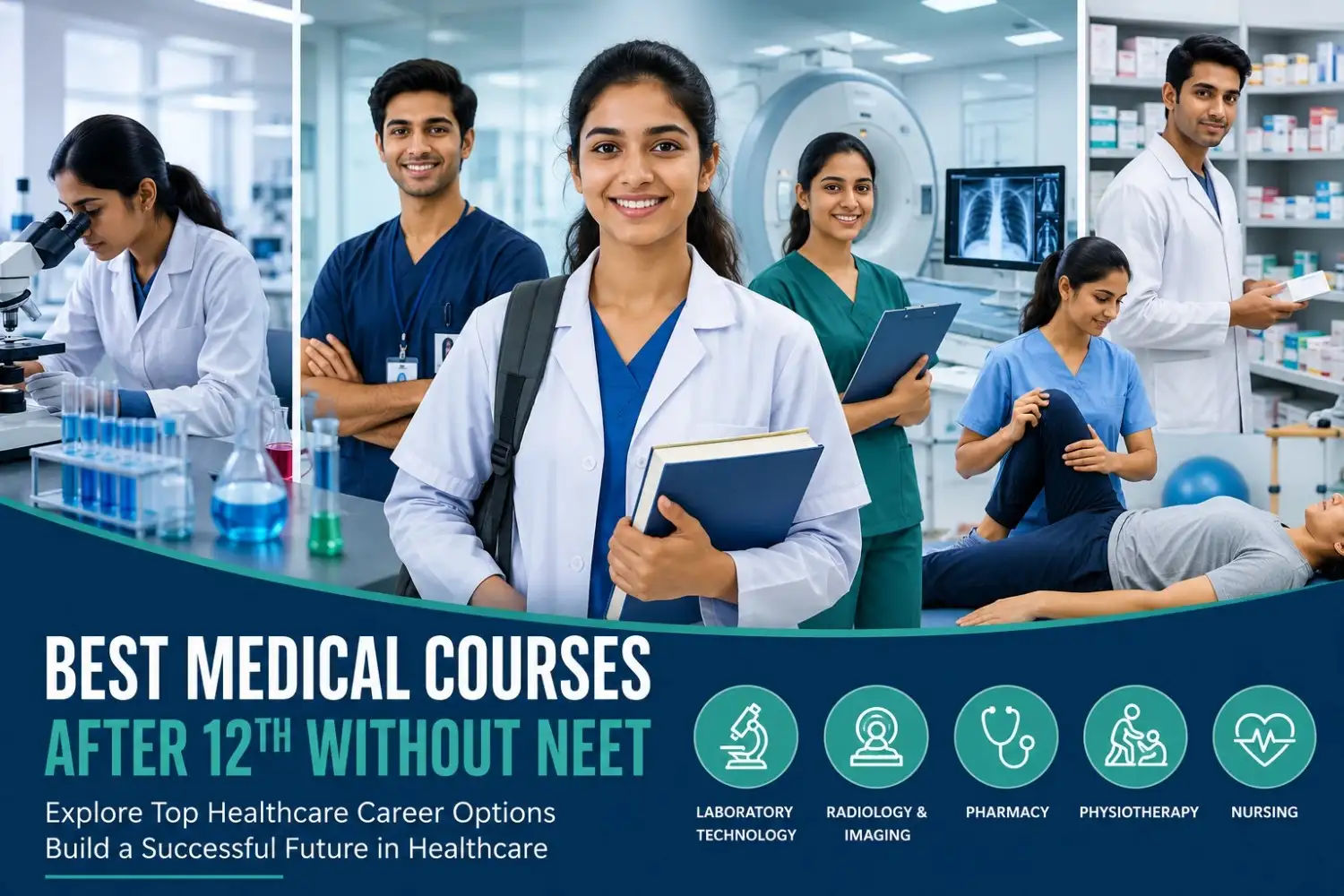
Best Medical Courses After 12th Without NEET
Choosing a career after Class 12 can feel overwhelming, especially for students who dream of working in healthcare but do not wish to take the NEET exam. The good news is that the healthcare industry offers numerous rewarding career opportunities that do not require NEET.
Whether your goal is to work in hospitals, diagnostic laboratories, rehabilitation centers, pharmaceutical companies, or healthcare management, several professional medical and allied health science courses can help you build a successful future.
If you're still exploring healthcare career options, you can also find valuable career guidance and admission resources on Vidya Udbhav, including student counseling, admission support, and career planning guides.
What Are Medical Courses Without NEET?
Medical courses without NEET are healthcare-related academic programs that allow students to pursue professional careers without having to qualify for the National Eligibility cum Entrance Test (NEET).
These programs focus on diagnosis, patient care, laboratory sciences, medical technology, rehabilitation, pharmacy, nutrition, healthcare administration, and public health.
Quick Answer
Students who have completed Class 12 with Science (PCB or PCM in many cases) can pursue several healthcare courses without appearing for NEET.
Why Choose Medical Courses Without NEET?
Many students believe becoming a doctor is the only healthcare career available. In reality, hospitals depend on hundreds of healthcare professionals besides physicians.
Some advantages include:
- Faster career entry
- High employability
- Growing healthcare demand worldwide
- Diverse specialization options
- Competitive salary packages
- Opportunities in India and abroad
- Lower admission competition compared to MBBS.
One thing many beginners miss is that allied healthcare professionals are among the fastest-growing occupations globally.
Best Medical Courses After 12th Without NEET
| B.Sc. Medical Laboratory Technology (MLT) | 3-4 Years | Medical Laboratory Technologist |
| B.Sc. Radiology & Imaging Technology | 3-4 Years | Radiology Technician |
| B.Sc. Operation Theatre Technology | 3-4 Years | OT Technologist |
| B.Sc. Dialysis Technology | 3-4 Years | Dialysis Technician |
| B.Sc. Optometry | 4 Years | Optometrist |
| Bachelor of Physiotherapy (BPT)* | 4.5 Years | Physiotherapist |
| B.Sc. Nursing* | 4 Years | Registered Nurse |
| B.Pharmacy | 4 Years | Pharmacist |
| B.Sc. Nutrition & Dietetics | 3 Years | Clinical Dietitian |
| B.Sc. Biotechnology | 3 Years | Research Associate |
| B.Sc. Occupational Therapy | 4 Years | Occupational Therapist |
| B.Sc. Cardiac Care Technology | 3-4 Years | Cardiac Technologist |
*Admission policies vary by institution, so always verify eligibility requirements.
Course Overview
1. Medical Laboratory Technology (MLT)
Medical laboratory professionals play an essential role in diagnosing diseases through laboratory testing.
Skills Required
- Laboratory analysis
- Accuracy
- Scientific knowledge
- Data interpretation
Career Scope
- Hospitals
- Diagnostic laboratories
- Research centers
- Blood banks
2. Radiology & Imaging Technology
Radiology professionals operate advanced imaging equipment such as MRI, CT Scan, Ultrasound, and X-ray systems.
Career Opportunities
- Hospitals
- Trauma centers
- Diagnostic imaging centers
3. Operation Theatre Technology
Operation theatre technologists assist surgeons before, during, and after surgeries.
Responsibilities include:
- Sterilizing instruments
- Preparing operating theatres
- Assisting surgical teams
- Managing surgical equipment
4. Dialysis Technology
With the increasing number of kidney disease patients worldwide, dialysis technologists are in high demand.
Students interested in renal healthcare can also explore the healthcare career guidance available through Vidya Udbhav for admission planning and career counseling.
5. Optometry
Optometrists diagnose vision problems, prescribe corrective lenses, and support eye care specialists.
Growing digital screen usage has significantly increased demand for qualified optometrists.
6. Physiotherapy
Physiotherapists help patients recover from injuries, surgeries, neurological disorders, and sports-related conditions.
They work with:
- Athletes
- Elderly patients
- Children
- Orthopedic patients
7. B.Pharmacy
A pharmacy combines healthcare with pharmaceutical sciences.
Graduates can work in:
- Pharmaceutical companies
- Drug manufacturing
- Hospitals
- Clinical research
- Regulatory affairs
Eligibility Criteria
Most healthcare courses require:
- 10+2 with Science
- PCB or PCM, depending on the course
- Minimum qualifying marks as specified by the institution
- Institution-specific entrance process (if applicable)
Always check the latest admission guidelines before applying.
Benefits of Medical Courses Without NEET
Here is what actually works for many students who want a healthcare career without the pressure of competitive medical entrance exams.
Advantages
- Less competitive admission process
- Affordable education options
- Strong job market
- Practical skill development
- Early career opportunities
- Higher education pathways
- Global employment prospects
Challenges Students Should Know
Every career path has its own challenges.
Common ones include:
- Selecting the right specialization
- Choosing an accredited institution
- Gaining practical clinical exposure
- Keeping up with advancing medical technologies
Fortunately, these challenges can be managed with proper planning and continuous learning.
Step-by-Step Guide to Choosing the Right Course
Step 1: Identify Your Interest
Ask yourself:
- Do you enjoy laboratory work?
- Are you interested in patient care?
- Do you prefer technology-based healthcare?
Step 2: Research Career Opportunities
Compare:
- Job demand
- Salary potential
- Future growth
- Skill requirements
Step 3: Check Eligibility
Different institutions may have different admission requirements.
Always review the latest eligibility criteria before applying.
Step 4: Choose a Recognized Institution
Accreditation, clinical training, experienced faculty, and placement support should all be part of your decision.
Students can also explore admission guidance and educational counseling resources available on Vidya Udbhav before finalizing a course.
Real-Life Example
A student interested in healthcare but unable to secure an MBBS seat chooses a B.Sc. Medical Laboratory Technology. After completing clinical training, they join a diagnostic laboratory and later specialize in molecular diagnostics, opening opportunities in research laboratories and international healthcare organizations.
This illustrates how alternative healthcare careers can be equally rewarding.
Beginner Strategy
If you're just starting:
- Explore different healthcare fields.
- Speak with career counselors.
- Compare course outcomes.
- Visit hospitals or laboratories if possible.
- Understand your long-term career goals before selecting a specialization.
Advanced Career Growth Strategy
After graduation, professionals can pursue:
- Master's degree
- Clinical specialization
- Hospital administration
- Healthcare management
- Medical research
- International certifications
Continuous learning significantly improves career progression.
Common Mistakes to Avoid
Many students make these avoidable mistakes:
- Choosing a course based only on popularity
- Ignoring future job demand
- Not checking institutional accreditation.
- Overlooking practical training opportunities
- Focusing only on the starting salary
Careful research always pays off.
Expert Tips
Healthcare professionals often recommend:
- Build communication skills.
- Strengthen computer literacy.
- Gain clinical exposure through internships.
- Stay updated with new medical technologies.
- Develop teamwork and patient-care skills.
These qualities are highly valued by employers.
Best Practices for Career Success
- Maintain strong academic performance.
- Complete internships seriously.
- Attend workshops and certifications.
- Develop problem-solving abilities.
- Build professional networking opportunities.
Small efforts throughout your education create long-term career advantages.
Future Trends in Healthcare Careers
Healthcare is evolving rapidly.
Growing fields include:
- Artificial Intelligence in healthcare
- Telemedicine
- Medical imaging
- Molecular diagnostics
- Digital health records
- Precision medicine
- Healthcare analytics
Students entering allied health sciences today are likely to benefit from increasing global demand.
Final Actionable Advice
If your dream is to work in healthcare but NEET is not part of your plan, don't assume your options are limited.
Focus on choosing a course that matches your interests, strengths, and long-term goals. Build practical skills, seek quality education, and continue learning throughout your career.
For admission support, career planning, and healthcare education guidance, explore the student resources available on Vidya Udbhav.
Conclusion
Medical careers extend far beyond becoming a doctor. The healthcare industry relies on skilled professionals across diagnostics, rehabilitation, pharmacy, imaging, laboratory sciences, nutrition, and patient care.
The best medical courses after 12th without NEET provide excellent career opportunities, competitive salaries, and strong long-term growth. By selecting the right program and pursuing continuous skill development, students can build meaningful and successful careers in healthcare without taking the NEET examination.
Frequently Asked Questions
1. Which is the best medical course after 12th without NEET?
Popular choices include Medical Laboratory Technology, Radiology, Physiotherapy, Pharmacy, Dialysis Technology, and Optometry, depending on your interests and career goals.
2. Can I get a good healthcare job without NEET?
Yes. Many hospitals, laboratories, rehabilitation centers, and pharmaceutical companies recruit graduates from allied health science and healthcare programs that do not require NEET.
3. Are medical courses without NEET in demand?
Yes. Demand for trained healthcare professionals continues to grow globally due to expanding healthcare services, aging populations, and advancements in medical technology.
4. Which course offers the highest salary without NEET?
Salary depends on specialization, experience, location, and employer. Fields such as Radiology, Physiotherapy, Medical Laboratory Technology, Pharmacy, and Cardiac Care Technology often provide strong earning potential.
5. Can I study abroad after completing a medical course without NEET?
Yes. Many graduates pursue higher education, certifications, or employment opportunities abroad, subject to the destination country's licensing and eligibility requirements.