

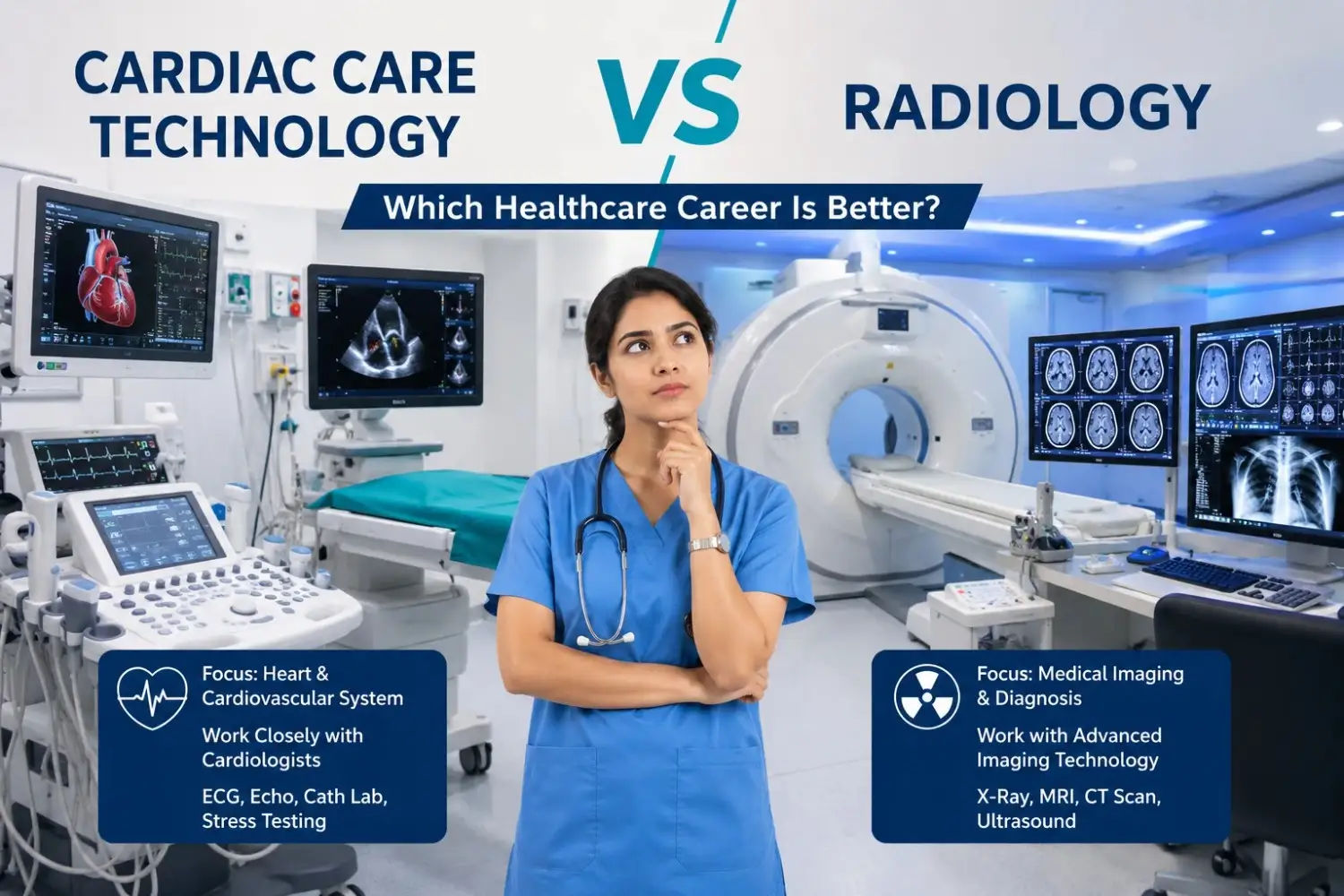
Cardiac Care Technology vs Radiology: Which Is Better?
Choosing a healthcare career can be challenging, especially when multiple promising options seem equally attractive. Among the fastest-growing allied healthcare fields today, Cardiac Care Technology and Radiology stand out because of their high demand, strong career prospects, and crucial role in patient care.
Students often ask, "Which is better: Cardiac Care Technology or Radiology?"
The answer depends on your interests, career goals, preferred work environment, and long-term aspirations.
In this detailed comparison, we will explore every important aspect of both fields, including course structure, job roles, salary potential, career growth, future demand, and industry trends to help you make an informed decision.
Students interested in healthcare career planning may also benefit from the career guidance resources available on Vidya Udbhav, including strategies for selecting healthcare courses and student success roadmaps.
Quick Answer: Cardiac Care Technology vs Radiology
Cardiac Care Technology is better if you:
- Enjoy working directly with patients.
- Are interested in heart health and cardiovascular diseases
- Want to assist cardiologists during procedures.
- Prefer a specialized healthcare career.
Radiology is better if you:
- Enjoy medical imaging and technology.
- Like analyzing diagnostic images
- Prefer working with advanced imaging equipment.
- Want broader employment opportunities.
For most students seeking wider career flexibility, Radiology often offers more diverse job opportunities. However, Cardiac Care Technology can provide stronger specialization and niche expertise.
Understanding Cardiac Care Technology
Cardiac Care Technology focuses on diagnosing, monitoring, and assisting in the treatment of heart-related conditions.
Cardiac technologists work closely with cardiologists and cardiac surgeons to assess cardiovascular health and support critical procedures.
Major Areas of Work
- Electrocardiography (ECG)
- Echocardiography
- Cardiac catheterization support
- Stress testing
- Holter monitoring
- Cardiac rehabilitation
Key Responsibilities
- Recording heart activity
- Conducting cardiac diagnostic tests
- Assisting during angiography procedures
- Monitoring patients during cardiac interventions
- Maintaining cardiac diagnostic equipment
Understanding Radiology
Radiology is the branch of healthcare that uses medical imaging technologies to diagnose diseases and injuries.
Radiology professionals help physicians identify medical conditions through detailed imaging studies.
Major Imaging Technologies
- X-Ray
- CT Scan
- MRI
- Ultrasound
- Mammography
- Fluoroscopy
Key Responsibilities
- Operating imaging equipment
- Positioning patients correctly
- Capturing diagnostic-quality images
- Ensuring radiation safety
- Assisting radiologists in diagnosis
Cardiac Care Technology vs Radiology: Detailed Comparison
| Specialization | Heart and cardiovascular system | Entire body imaging |
| Patient Interaction | High | Moderate |
| Technology Usage | Cardiac diagnostic devices | Imaging equipment |
| Career Flexibility | Moderate | High |
| Demand Growth | High | Very High |
| Hospital Departments | Cardiology | Multiple Departments |
| Higher Education Options | Specialized | Diverse |
| Global Opportunities | Good | Excellent |
| Work Environment | Cardiac Units | Imaging Centers & Hospitals |
| Scope of Practice | Specialized | Broad |
Course Structure Comparison
Cardiac Care Technology Curriculum
Students typically study:
- Human Anatomy
- Cardiac Anatomy
- Physiology
- ECG Techniques
- Echocardiography
- Cardiovascular Diseases
- Cardiac Pharmacology
- Cath Lab Procedures
Radiology Curriculum
Students generally learn:
- Radiographic Physics
- Human Anatomy
- Imaging Techniques
- Radiation Protection
- CT Imaging
- MRI Technology
- Ultrasound Principles
- Diagnostic Procedures
One thing many beginners miss is that radiology programs often expose students to a wider range of diagnostic technologies compared to cardiac care programs.
Skills Required for Success
Skills Needed in Cardiac Care Technology
- Attention to detail
- Patient communication
- Cardiac monitoring expertise
- Clinical decision support
- Team collaboration
- Emergency response awareness
Skills Needed in Radiology
- Technical proficiency
- Image interpretation support
- Equipment handling
- Precision and accuracy
- Patient positioning
- Radiation safety management
Career Opportunities
Cardiac Care Technology Jobs
Graduates can work as:
- Cardiac Care Technologist
- ECG Technician
- Echocardiography Technician
- Cath Lab Technologist
- Cardiac Monitoring Specialist
- Cardiovascular Technician
Radiology Jobs
Graduates can work as:
- Radiology Technologist
- MRI Technologist
- CT Scan Technologist
- Ultrasound Technician
- Mammography Technologist
- Diagnostic Imaging Specialist
Radiology typically offers a wider range of job titles and healthcare settings.
Salary Comparison
Salary varies by country, healthcare facility, specialization, and experience level.
Typical Career Progression
| Experience Level | Cardiac Care Technology | Radiology |
| Entry Level | Competitive | Competitive |
| Mid-Level | Strong Growth | Strong Growth |
| Senior Level | Specialized Earnings | Leadership Opportunities |
| International Market | Good Demand | Excellent Demand |
Radiology professionals often have more opportunities to diversify into higher-paying imaging specializations.
Benefits of Choosing Cardiac Care Technology
1. Specialized Expertise
You become an expert in cardiovascular healthcare, one of the most critical medical specialties.
2. Direct Patient Impact
Cardiac technologists frequently interact with patients and contribute directly to life-saving procedures.
3. Growing Cardiac Disease Burden
Heart disease remains one of the leading health concerns worldwide, creating consistent demand for skilled professionals.
4. Strong Clinical Exposure
Students gain hands-on experience in high-acuity clinical environments.
Benefits of Choosing Radiology
1. Wider Career Scope
Radiology professionals can work in multiple healthcare departments and facilities.
2. Continuous Technological Innovation
Advanced imaging technologies create exciting learning opportunities.
3. Higher Global Mobility
Radiology qualifications are recognized across many healthcare systems worldwide.
4. Multiple Specialization Options
Professionals can later specialize in MRI, CT, ultrasound, mammography, or interventional imaging.
Challenges in Both Fields
Cardiac Care Technology Challenges
- High-pressure emergency situations
- Specialized learning curve
- Intensive patient monitoring responsibilities
Radiology Challenges
- Radiation safety compliance
- Rapid technological advancements
- Maintaining imaging precision
Here is where many people make mistakes: they choose a course based solely on perceived salary rather than personal interest and aptitude.
Real-Life Career Scenarios
Scenario 1: Student Interested in Heart Health
A student fascinated by cardiology, ECG interpretation, and cardiovascular diseases may thrive in Cardiac Care Technology.
Scenario 2: Student Interested in Medical Technology
Someone who enjoys advanced machines, imaging systems, and diagnostic technology may find Radiology more rewarding.
Scenario 3: Student Seeking Broad Opportunities
Radiology often provides access to a wider variety of healthcare institutions and specializations.
Beginner Strategy for Choosing the Right Course
Choose Cardiac Care Technology If:
- You are passionate about heart health.
- You enjoy patient-centered care.
- You want a focused specialization.
Choose Radiology If:
- You enjoy technology and imaging.
- You want broader career options.
- You are interested in multiple diagnostic specialties.
Students can strengthen their decision-making process by exploring healthcare career planning guides and admission counseling resources available through Vidya Udbhav.
Advanced Career Growth Strategy
After Cardiac Care Technology
Possible advancement paths include:
- Echocardiography specialization
- Cath Lab specialization
- Cardiovascular diagnostics
- Clinical training roles
- Hospital administration
After Radiology
Advanced opportunities include:
- MRI specialization
- CT specialization
- Interventional radiology support
- Imaging management
- Healthcare administration
Radiology generally offers more lateral career movement opportunities.
Tools and Technologies Used
Cardiac Care Technology
- ECG Machines
- Echocardiography Systems
- Holter Monitors
- Stress Testing Equipment
- Cath Lab Systems
Radiology
- X-Ray Machines
- CT Scanners
- MRI Systems
- Ultrasound Devices
- Digital Imaging Software
Common Mistakes Students Should Avoid
1. Following Friends
Career decisions should be based on personal interests rather than peer influence.
2. Ignoring Industry Demand
Research healthcare workforce trends before choosing a specialization.
3. Focusing Only on Salary
Long-term job satisfaction matters just as much as income.
4. Overlooking Skill Requirements
Every healthcare profession requires unique competencies and work styles.
5. Not Exploring Internship Opportunities
Practical exposure often reveals whether a field truly matches your interests.
Expert Tips for Making the Right Choice
- Visit hospitals and diagnostic centers whenever possible.
- Talk to working professionals in both fields.
- Review actual course syllabi.
- Consider future specialization options.
- Evaluate your comfort with patient interaction.
- Assess your interest in technology versus clinical procedures.
One thing many beginners miss is that career satisfaction often comes from alignment between personality and daily job responsibilities.
Future Trends
Future of Cardiac Care Technology
Growing demand is expected due to:
- Increasing cardiovascular disease cases
- Aging populations
- Expansion of cardiac care centers
- Preventive heart health programs
Future of Radiology
Growth drivers include:
- Artificial intelligence in imaging
- Advanced diagnostic technologies
- Increased preventive screening
- Expansion of tele-radiology services
Radiology is expected to remain one of the most technology-driven healthcare careers in the coming decade.
Best Practices for Career Success
- Focus on practical training.
- Build strong clinical communication skills.
- Stay updated with technological advancements.
- Pursue certifications and specialization programs.
- Develop professional networking relationships.
- Participate in healthcare workshops and conferences.
Final Advice
If your passion lies in cardiovascular medicine and direct patient care, Cardiac Care Technology can be an excellent choice.
If you want broader career opportunities, exposure to cutting-edge technology, and multiple specialization pathways, Radiology may offer greater long-term flexibility.
Neither field is universally better. The right choice depends on your interests, strengths, and career vision.
For students exploring healthcare education pathways, admission strategies, and career planning resources, related educational guidance content on Vidya Udbhav can help simplify the decision-making process.
Conclusion
The comparison between Cardiac Care Technology vs Radiology ultimately comes down to specialization versus versatility.
Cardiac Care Technology offers focused expertise in cardiovascular healthcare, while Radiology provides broader diagnostic opportunities across multiple medical specialties.
Both careers are respected, rewarding, and increasingly important in modern healthcare systems. By understanding your interests, evaluating career goals, and researching industry trends, you can confidently choose the path that aligns best with your future aspirations.
Frequently Asked Questions (FAQs)
1. Which course has better scope: Cardiac Care Technology or Radiology?
Radiology generally offers broader career opportunities, while Cardiac Care Technology provides specialized expertise in cardiovascular healthcare.
2. Is Cardiac Care Technology a good career?
Yes. Growing rates of heart disease and expanding cardiac care facilities continue to create demand for skilled cardiac technologists.
3. Does Radiology have international job opportunities?
Yes. Radiology professionals are in demand globally due to increasing healthcare infrastructure and diagnostic imaging requirements.
4. Which course is more technology-oriented?
Radiology is typically more technology-intensive because it involves advanced imaging systems such as MRI and CT scanners.
5. Can I pursue higher studies after these courses?
Yes. Both fields offer opportunities for specialization, advanced certifications, and postgraduate education.
6. Which course is better for patient interaction?
Cardiac Care Technology generally involves more direct patient interaction compared to Radiology.
7. Which field has better future demand?
Both fields have strong future demand, but Radiology may experience faster growth due to advancements in medical imaging and artificial intelligence.