

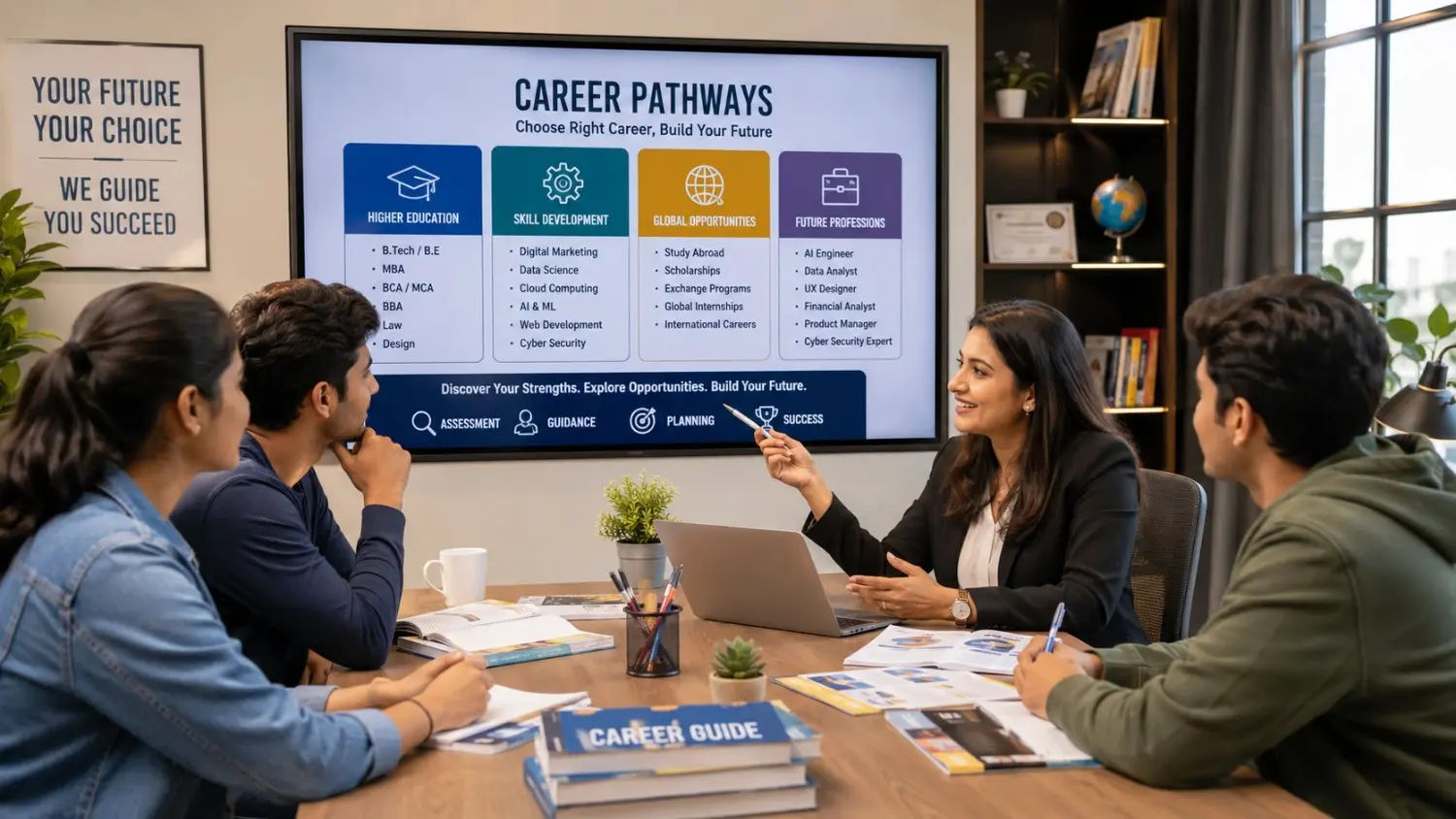
Confused About Your Career? Here's Why Career Counselling Can Change Your Future
Choosing a career is one of the most important decisions you'll ever make. Yet for many students and even working professionals, it is also one of the most confusing.
With thousands of courses, rapidly changing industries, emerging technologies, and new job roles appearing every year, it's completely normal to feel uncertain about your future.
This is exactly where career counselling becomes valuable.
Rather than relying on opinions from friends or family, professional career counselling helps you understand your abilities, interests, personality, and long-term goals. It provides a structured roadmap that leads to informed decisions instead of guesswork.
If you're just beginning your career journey, exploring new opportunities, or considering a career change, this guide will help you understand why career counselling can truly transform your future.
For additional educational guidance, explore the career planning guide available on www.vidyaudbhav.com.
What Is Career Counselling?
Career counselling is a professional guidance process that helps individuals identify suitable career paths based on their:
- Skills
- Interests
- Personality
- Academic background
- Strengths
- Career aspirations
- Market opportunities
Instead of simply recommending a course, career counselling focuses on finding the best fit between an individual and their future profession.
Quick Answer
Career counselling helps people make informed education and career decisions by assessing their strengths, interests, and goals while providing expert guidance based on current industry trends.
Why Career Decisions Are Becoming More Difficult
Today's job market is very different from what it was even ten years ago.
Students now have access to hundreds of degree programs, online certifications, global universities, remote work opportunities, and AI-driven careers.
While more choices create more opportunities, they also create more confusion.
Common reasons people struggle include:
- Too many career options
- Lack of awareness
- Peer pressure
- Family expectations
- Fear of making the wrong decision
- Limited knowledge about emerging careers
- Rapid technological change
One thing many beginners miss is that choosing a career isn't just about selecting a degree. It's about building a long-term professional journey.
Types of Search Intent This Topic Serves
| Informational | Learn what career counselling is |
| Commercial | Compare counselling services |
| Transactional | Book career counselling |
| Navigational | Find trusted career guidance resources |
How Career Counselling Works
Career counselling follows a structured approach rather than offering random advice.
1. Self-Assessment
The process begins by understanding:
- Personality
- Interests
- Aptitude
- Strengths
- Weaknesses
- Career goals
Assessment tools often help identify suitable career directions.
2. Career Exploration
Once your profile is clear, counsellors introduce suitable industries, professions, educational pathways, and skill requirements.
For example:
- Healthcare
- Engineering
- Artificial Intelligence
- Business
- Finance
- Law
- Digital Marketing
- Data Science
- Design
- Hospitality
3. Goal Setting
The next step is building realistic short-term and long-term career goals.
Instead of saying:
"I want a good job."
Career counselling helps define goals like:
- Complete a Bachelor's degree.
- Gain internship experience
- Build technical skills
- Earn industry certifications
- Prepare for interviews
4. Career Roadmap
Finally, students receive a personalized roadmap covering:
- Recommended courses
- Skill development
- Entrance exams
- Scholarships
- Higher education
- Internship planning
- Placement preparation
You can also strengthen your preparation using the student success roadmap available on www.vidyaudbhav.com.
Benefits of Career Counselling
Career counselling offers much more than career advice.
Better Decision Making
Instead of following trends, students make informed choices based on facts.
Saves Time
Changing courses midway often leads to wasted years.
Proper guidance reduces this risk.
Builds Confidence
Understanding your strengths naturally increases confidence during academic and career planning.
Improves Career Satisfaction
People who choose careers aligned with their interests often report higher job satisfaction.
Identifies Hidden Opportunities
Many students know about traditional careers but remain unaware of emerging fields like:
- AI Engineering
- Cybersecurity
- UX Design
- Cloud Computing
- Digital Healthcare
- Sustainability Management
Common Career Counselling Myths
Here is where many people make mistakes.
Myth 1: Only Weak Students Need Career Counselling
Reality:
Even high-performing students often struggle to choose between multiple career options.
Myth 2: Career Counselling Gives One a Fixed Career
Reality:
Professional counselling usually recommends several suitable career paths.
Myth 3: Parents Already Know What's Best
Parents offer valuable life experience, but they may not always be familiar with today's evolving job market.
Professional guidance complements family advice rather than replacing it.
Real-Life Example
Imagine two engineering students.
Student A chooses engineering simply because friends did.
Student B takes career counselling first.
After aptitude testing, Student B discovers a strong interest in product design and user experience. They specialize accordingly, build a strong portfolio, complete internships, and secure a rewarding career in UX Design.
The difference wasn't intelligence.
It was informed decision-making.
Case Study
Case: A Confused High School Student
Challenge
A Class 12 student enjoyed biology but wasn't interested in becoming a doctor.
Counselling Outcome
After assessments and discussions, the student explored biotechnology, genetics, and biomedical research.
Result
Instead of preparing for years for an unsuitable career, the student pursued a field aligned with both interests and strengths.
Career Counselling Tools
The following tools are commonly used by career professionals.
| Career Interest Assessments | Psychometric Assessments |
| Aptitude Tests | Personality Profiling |
| Skill Evaluation Tools | Career Planning Software |
| Goal Mapping Worksheets | AI Career Analytics |
Beginner Strategy
If you're unsure where to begin, follow these steps.
- Identify your interests.
- List your strengths.
- Explore different industries.
- Research future job demand.
- Speak with a qualified career counsellor.
- Build relevant skills.
- Gain practical experience through internships.
Advanced Career Planning Strategy
Professionals and university students can go one step further.
Focus on:
- Industry certifications
- Portfolio development
- Personal branding
- LinkedIn networking
- Internship experience
- Global opportunities
- Continuous learning
Career planning should evolve alongside market trends.
Common Mistakes to Avoid
Many students unknowingly delay their success by making avoidable mistakes.
Avoid:
- Following friends blindly
- Choosing careers based only on salary
- Ignoring personal interests
- Not researching industries
- Delaying career planning
- Avoiding professional guidance
- Ignoring future job trends
Expert Tips
Experienced career advisors often recommend:
- Research before making decisions.
- Develop transferable skills such as communication and problem-solving.
- Stay updated with emerging industries.
- Build practical experience early.
- Keep learning throughout your career.
- Review your goals every year.
Best Practices for Career Success
To maximize long-term career growth:
- Create yearly career goals.
- Learn in-demand skills continuously.
- Build a strong professional network.
- Maintain an updated resume and portfolio.
- Seek mentorship whenever possible.
- Stay flexible as industries evolve.
Future Trends in Career Counselling
Career counselling is becoming increasingly data-driven.
Some growing trends include:
- AI-powered career assessments
- Skills-first hiring
- Remote global employment
- Personalized learning pathways
- Digital career portfolios
- Lifelong career coaching
This becomes more important when industries evolve faster than traditional education systems.
Actionable Final Advice
If you're feeling confused about your future, don't wait until graduation to start planning.
Career counselling is not about predicting your future—it is about preparing you for it.
Start by understanding yourself, exploring opportunities, building relevant skills, and making informed decisions backed by professional guidance.
A clear career plan today can save years of uncertainty tomorrow.
For more educational insights, career resources, and student guidance, explore the career guidance resources and career planning guide on www.vidyaudbhav.com.
Conclusion
Career success rarely happens by accident. It is built through thoughtful planning, continuous learning, and informed decision-making.
Career counselling empowers students, graduates, and professionals to make choices that align with their strengths, passions, and long-term goals. Whether you're selecting your first degree, changing careers, or preparing for higher education, the right guidance can help you avoid costly mistakes and move forward with confidence.
The earlier you begin your career planning journey, the greater your chances of building a fulfilling and successful future.
Frequently Asked Questions (FAQs)
1. What is career counselling?
Career counselling is a professional process that helps individuals identify suitable education and career paths based on their interests, skills, personality, and goals.
2. Who should take career counselling?
Students, graduates, working professionals, career changers, and anyone uncertain about their future career direction can benefit from career counselling.
3. When is the best time for career counselling?
The ideal time is before choosing a stream, degree program, college, or career path. However, it can be beneficial at any stage of your professional journey.
4. Does career counselling guarantee a job?
No. Career counselling provides guidance and a personalized roadmap, but success depends on your learning, skills, and consistent effort.
5. Is career counselling useful for professionals?
Yes. Professionals often use career counselling to transition into new industries, identify growth opportunities, or pursue leadership roles.
6. How long does the career counselling process take?
It varies depending on individual needs. Some sessions may take a few hours, while comprehensive career planning can involve multiple sessions.