

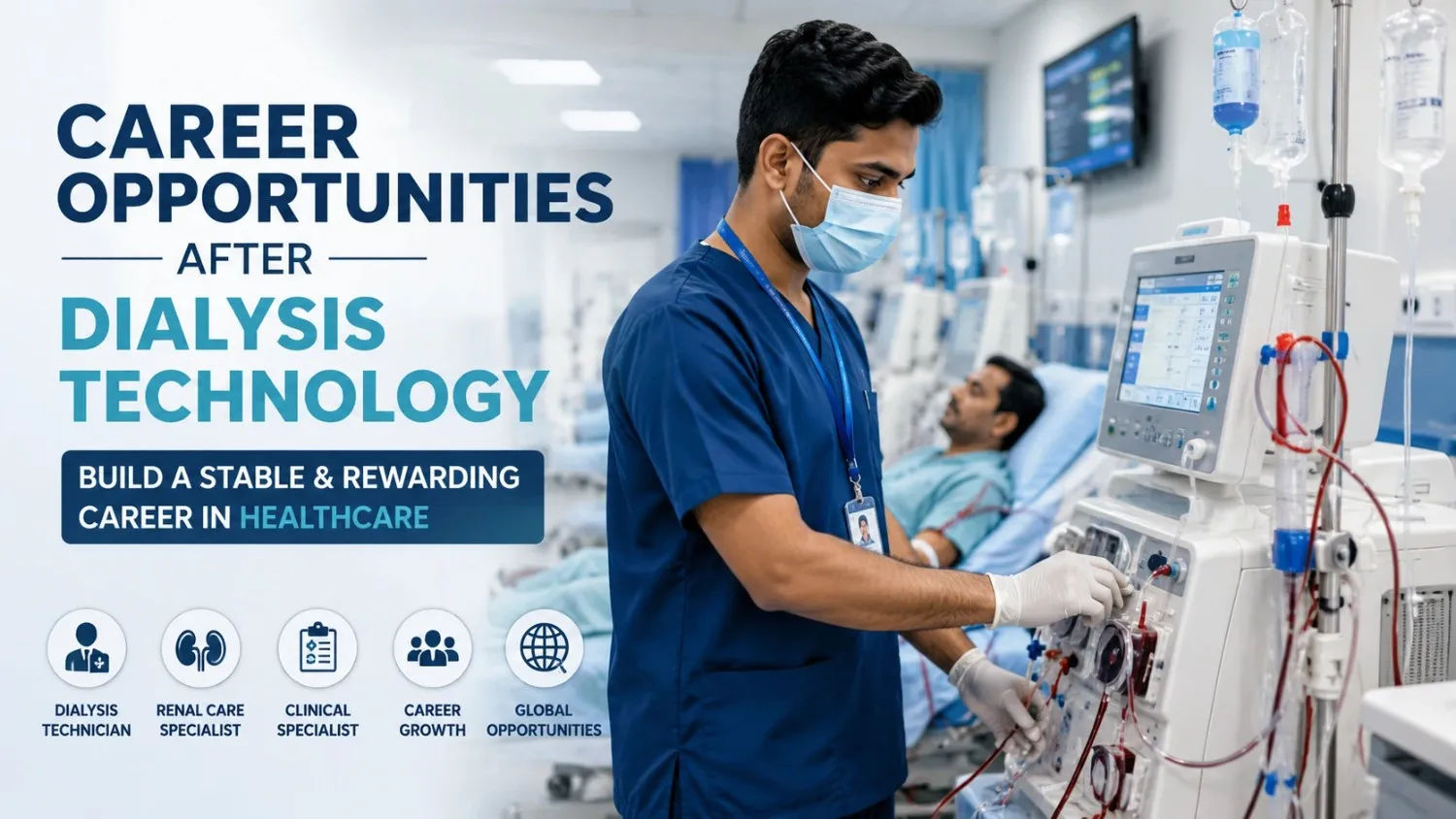
Career Opportunities After Dialysis Technology: Complete Career Guide for Students
The healthcare industry continues to expand rapidly across the world, creating a growing demand for skilled allied health professionals. Among the most rewarding healthcare careers today is Dialysis Technology, a specialized field focused on helping patients with kidney-related disorders receive life-saving treatment.
If you are pursuing or planning to pursue a course in Dialysis Technology, you might be wondering about your career prospects, salary potential, higher education options, and future growth opportunities.
The good news is that the demand for dialysis professionals is increasing globally due to the rising number of patients suffering from chronic kidney disease, diabetes, hypertension, and renal failure.
This guide explores everything you need to know about career opportunities after Dialysis Technology and how you can build a successful future in this growing healthcare sector.
For students exploring healthcare careers, our student success roadmap and healthcare career planning resources on Vidya Udbhav can help you make informed decisions.
What is Dialysis Technology?
Dialysis Technology is a specialized branch of healthcare that focuses on operating dialysis equipment and assisting patients who suffer from kidney failure or severe kidney dysfunction.
Dialysis professionals work closely with nephrologists, nurses, and other healthcare experts to provide safe and effective treatment.
Their responsibilities include:
- Preparing dialysis machines
- Monitoring patient health during treatment
- Maintaining equipment safety
- Managing dialysis procedures
- Recording patient data
- Assisting emergency situations
These professionals play a critical role in improving patients' quality of life.
Quick Answer: What Are the Career Opportunities After Dialysis Technology?
After completing Dialysis Technology, graduates can work as:
- Dialysis Technician
- Dialysis Technologist
- Renal Care Technician
- Nephrology Technician
- Clinical Dialysis Specialist
- Dialysis Unit Supervisor
- Healthcare Equipment Specialist
- Hospital Operations Executive
- Clinical Research Associate
- Medical Trainer
They can also pursue higher studies and international healthcare careers.
Why is Dialysis Technology a High-Demand Career?
Several global health trends are driving demand for dialysis professionals.
Increasing Kidney Disease Cases
Chronic kidney disease affects millions of people worldwide, requiring regular dialysis treatment.
Aging Population
Older adults are more likely to develop kidney-related health issues.
Rising Diabetes and Hypertension Cases
Both conditions are major contributors to kidney failure.
Expansion of Healthcare Facilities
Hospitals, specialty clinics, and dialysis centers continue to expand their renal care departments.
This combination creates strong job security and long-term career growth.
Career Scope After Dialysis Technology
The scope of Dialysis Technology extends far beyond operating dialysis machines.
Hospital Sector
Hospitals remain the largest employers of dialysis professionals.
Common employers include:
- Multi-specialty hospitals
- Government hospitals
- Private hospitals
- Medical colleges
- Teaching hospitals
Dialysis Centers
Dedicated dialysis clinics require skilled technicians to manage patient treatment sessions.
Renal Care Units
Specialized nephrology departments recruit trained dialysis professionals.
Home Healthcare Services
Many patients now receive dialysis treatment at home, creating additional employment opportunities.
Medical Equipment Industry
Manufacturers of dialysis equipment hire professionals for:
- Product demonstrations
- Technical support
- Training
- Quality assurance
Top Job Roles After Dialysis Technology
1. Dialysis Technician
This is the most common entry-level role.
Responsibilities include:
- Operating dialysis machines
- Monitoring patients
- Maintaining treatment records
- Ensuring patient safety
2. Dialysis Technologist
A technologist handles advanced procedures and equipment management.
They often work in large hospitals and specialty renal centers.
3. Renal Care Technician
These professionals assist nephrologists and provide comprehensive kidney care support.
4. Clinical Dialysis Specialist
Clinical specialists focus on advanced treatment protocols and patient management.
5. Dialysis Unit Supervisor
Experienced professionals can manage entire dialysis departments.
6. Medical Equipment Specialist
Equipment companies recruit dialysis graduates to support healthcare facilities using their technology.
Career Opportunities by Workplace
| Hospitals | Dialysis Technician, Technologist | High |
| Dialysis Centers | Renal Care Specialist | High |
| Medical Colleges | Clinical Instructor | Medium |
| Research Organizations | Clinical Research Associate | High |
| Healthcare Companies | Product Specialist | High |
| Home Healthcare | Dialysis Support Professional | Growing |
| International Healthcare Facilities | Renal Technician | Very High |
Salary After Dialysis Technology
Salary depends on:
- Qualification level
- Experience
- Location
- Healthcare facility
- Certifications
Entry-Level Professionals
Typically receive competitive healthcare industry salaries while gaining clinical experience.
Mid-Level Professionals
Professionals with 3–5 years of experience often move into supervisory positions with higher compensation.
Senior Professionals
Experienced dialysis specialists and managers can earn significantly higher salaries, especially in international healthcare systems.
One thing many beginners miss is that certifications and specialized training often influence salary growth more than years of experience alone.
Higher Education Options After Dialysis Technology
Many students choose further education to expand career opportunities.
Popular Higher Study Options
B.Sc. Dialysis Technology
Ideal for diploma holders seeking advanced education.
M.Sc. Allied Health Sciences
Provides broader healthcare expertise.
Hospital Administration
Suitable for students interested in management roles.
Healthcare Management
Combines clinical knowledge with administrative skills.
Clinical Research Programs
Helpful for research-oriented careers.
Public Health Programs
Open opportunities in healthcare planning and policy.
Students interested in long-term healthcare leadership can also explore career planning guides available on Vidya Udbhav.
International Career Opportunities
Healthcare systems worldwide face shortages of skilled dialysis professionals.
Popular destinations include:
- United States
- Canada
- United Kingdom
- Australia
- New Zealand
- Germany
- Japan
- United Arab Emirates
International opportunities often offer:
- Better compensation
- Advanced healthcare infrastructure
- Career progression
- Specialized training
Step-by-Step Career Path After Dialysis Technology
Step 1: Complete Your Qualification
Earn your diploma or degree from a recognized institution.
Step 2: Gain Clinical Experience
Practical hospital exposure is essential.
Step 3: Obtain Certifications
Additional certifications improve employability.
Step 4: Build Technical Expertise
Learn advanced dialysis systems and patient monitoring techniques.
Step 5: Choose a Specialization
Options include:
- Renal care
- Clinical research
- Healthcare management
- Medical technology
Step 6: Pursue Leadership Roles
With experience, move toward supervisory and administrative positions.
Benefits of Choosing a Career in Dialysis Technology
Strong Job Demand
Healthcare professionals remain essential worldwide.
Meaningful Work
You directly contribute to saving lives.
Career Stability
Kidney care services are continuously required.
Multiple Career Paths
Professionals can move into clinical, academic, research, or management roles.
Global Opportunities
Skills are recognized across many healthcare systems.
Challenges in This Profession
Like any healthcare career, dialysis technology has challenges.
Long Working Hours
Healthcare facilities often operate around the clock.
Emotional Responsibility
Working with critically ill patients requires compassion and resilience.
Continuous Learning
Technology and treatment protocols continue evolving.
Patient Safety Pressure
Accuracy and attention to detail are essential.
Practical Solutions for Career Growth
Here is what actually works for long-term success:
- Stay updated with medical technology.
- Attend healthcare workshops
- Build communication skills
- Learn patient management techniques.
- Develop leadership abilities
- Pursue advanced certifications
These strategies often help professionals stand out in competitive healthcare environments.
Real-Life Career Progression Example
Consider a graduate who starts as a Dialysis Technician.
Year 1–2:
- Clinical training
- Patient care experience
Year 3–5:
- Senior technician role
- Specialized certifications
Year 5–8:
- Unit coordinator or supervisor
Year 8+:
- Hospital administrator
- Clinical trainer
- International healthcare professional
This progression is common among professionals who actively upgrade their skills.
Useful Tools and Technologies in Dialysis Careers
Beginner-Friendly
- Electronic Medical Record Systems
- Patient Monitoring Devices
Intermediate Level
- Advanced Dialysis Machines
- Healthcare Analytics Software
Premium and Specialized
- Clinical Data Management Platforms
- Renal Care Management Systems
Understanding these technologies improves employability and workplace efficiency.
Beginner Strategy for Success
If you are just starting your journey:
- Focus on practical training.
- Develop patient communication skills.
- Learn infection control protocols.
- Build confidence with equipment handling.
- Seek internship opportunities.
Many students underestimate the importance of internships, but employers highly value hands-on experience.
Advanced Strategy for Experienced Professionals
Professionals aiming for leadership positions should:
- Pursue management certifications
- Learn healthcare administration
- Participate in clinical research.
- Mentor junior professionals
- Develop quality improvement expertise.
These skills create opportunities beyond clinical roles.
Common Mistakes to Avoid
Ignoring Practical Experience
Theory alone is not enough.
Avoiding Continuing Education
Healthcare technology evolves constantly.
Poor Communication Skills
Patient interaction is a core part of the profession.
Neglecting Certifications
Additional qualifications can significantly improve career prospects.
Limiting Career Vision
Many professionals overlook management and research opportunities.
Expert Tips for Long-Term Success
- Prioritize patient safety above everything else.
- Build strong professional relationships.
- Stay informed about renal healthcare advancements.
- Maintain accurate clinical records.
- Pursue lifelong learning.
This becomes more important when aiming for senior-level healthcare positions.
Future Trends in Dialysis Technology
The future of dialysis care looks promising.
Emerging trends include:
- Portable dialysis devices
- Home dialysis expansion
- Artificial intelligence in patient monitoring
- Telehealth integration
- Smart healthcare systems
- Personalized renal care
Professionals who adapt to these innovations will enjoy greater career opportunities.
Actionable Final Advice
If you are considering Dialysis Technology as a career, focus on three things:
- Strong clinical skills.
- Continuous learning.
- Professional growth planning.
Combine technical expertise with compassionate patient care, and you can build a rewarding healthcare career with long-term stability and global opportunities.
You may also benefit from exploring healthcare career guidance, placement preparation strategies, and student success resources available on Vidya Udbhav.
Conclusion
Career opportunities after Dialysis Technology are extensive and continue to grow globally. From hospitals and dialysis centers to healthcare management, research, and international employment, graduates have multiple pathways for professional success.
As kidney-related diseases continue to rise worldwide, skilled dialysis professionals will remain an essential part of the healthcare ecosystem.
Whether your goal is direct patient care, healthcare leadership, research, or international employment, Dialysis Technology offers a stable, respected, and future-ready career path.
Frequently Asked Questions (FAQs)
1. Is Dialysis Technology a good career option?
Yes. It offers strong job demand, career stability, meaningful patient interaction, and global employment opportunities.
2. What jobs can I get after Dialysis Technology?
You can work as a Dialysis Technician, Dialysis Technologist, Renal Care Technician, Clinical Specialist, Unit Supervisor, or Medical Equipment Specialist.
3. Can I pursue higher studies after Dialysis Technology?
Yes. Popular options include B.Sc. Dialysis Technology, Hospital Administration, Healthcare Management, Clinical Research, and Allied Health Sciences programs.
4. Are international jobs available for dialysis professionals?
Yes. Countries such as the United States, Canada, the United Kingdom, Australia, Germany, Japan, and the UAE regularly recruit skilled dialysis professionals.
5. What skills are important for success in Dialysis Technology?
Technical knowledge, patient care, communication skills, attention to detail, infection control practices, and continuous learning are essential.
6. Does Dialysis Technology have future scope?
Absolutely. Rising kidney disease cases, aging populations, and technological advancements continue to increase demand for dialysis professionals worldwide.