

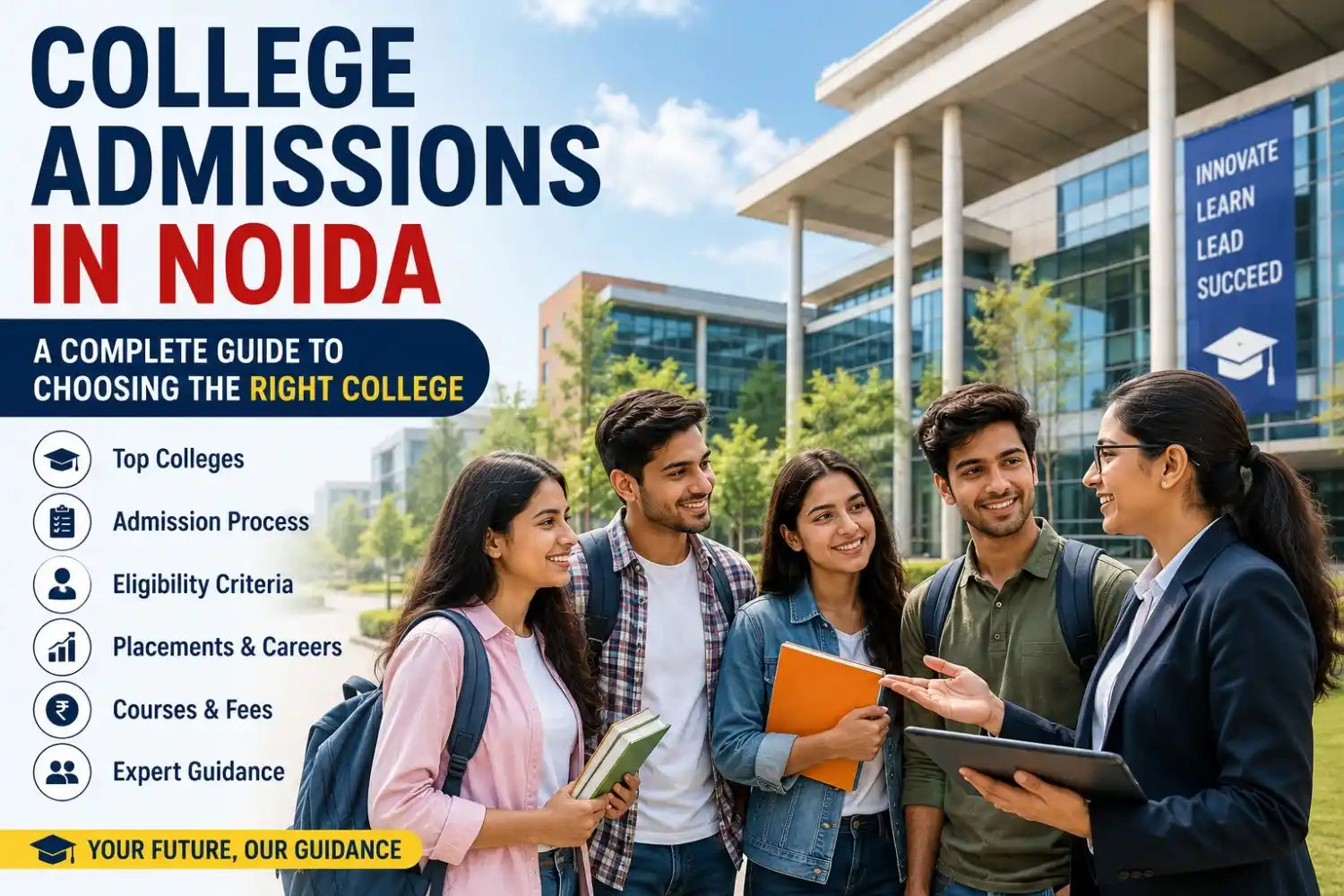
College Admissions in Noida: A Complete Guide to Choosing the Right College
Choosing the right college is one of the most important decisions in a student's academic journey. A college shapes your knowledge, skills, career opportunities, and personal growth. If you're planning to pursue higher education in India, Noida has emerged as one of the country's fastest-growing education hubs, offering world-class universities, industry-oriented programs, and excellent placement opportunities.
Whether you are a student from India or an international applicant exploring educational opportunities, this guide will help you understand the complete college admission process in Noida and make an informed decision.
If you're beginning your admission journey, explore the Career Guidance section at www.vidyaudbhav.com to understand course selection, eligibility, and admission support.
Why Choose Noida for Higher Education?
Noida has rapidly developed into a major educational destination due to its modern infrastructure, strong industry connections, and wide range of academic programs.
Some of the biggest advantages include:
- Highly reputed universities and colleges
- Excellent placement opportunities
- Industry-focused curriculum
- Affordable living compared to many metro cities
- Modern campuses with advanced facilities
- Easy connectivity to Delhi NCR
- Growing startup and corporate ecosystem
Students can choose from engineering, management, healthcare, law, design, commerce, computer science, hospitality, and many other disciplines.
Quick Overview of College Admissions in Noida
| Admission Type | Merit-Based & Entrance-Based |
| Popular Courses | B.Tech, BBA, MBA, BCA, MCA, Law, Pharmacy, Nursing |
| Application Mode | Online & Offline |
| Admission Season | Usually April to August |
| Eligibility | Depends on course and university |
| Placement Opportunities | High across technology, management, healthcare, and business sectors |
How to Choose the Right College in Noida
Many students focus only on rankings. However, experienced education counselors recommend evaluating multiple factors before making a final decision.
1. Identify Your Career Goal
Ask yourself:
- What career do I want?
- Which industry interests me?
- Do I want higher studies later?
- What skills do employers expect?
Choosing a course first often makes it much easier to select the right college.
You might also benefit from the career planning guide available on www.vidyaudbhav.com before shortlisting colleges.
2. Check College Recognition and Accreditation
Always verify whether the institution is recognized by relevant educational authorities.
Look for:
- Government approvals
- Accreditation status
- University recognition
- Program approvals
- Academic reputation
This becomes more important when you plan to pursue higher studies or seek employment abroad.
3. Evaluate Placement Records
Placement statistics reveal how effectively a college prepares students for real-world careers.
Look beyond average salary figures and consider:
- Placement percentage
- Top recruiters
- Internship opportunities
- Industry collaborations
- Skill development programs
- Alumni success stories
One thing many beginners miss is that internships often matter as much as final placements.
4. Review Faculty and Learning Environment
Quality education depends heavily on experienced faculty members.
Consider:
- Faculty qualifications
- Research activities
- Student-to-faculty ratio
- Industry experience
- Teaching methodology
- Practical learning opportunities
5. Compare Course Curriculum
A modern curriculum should include:
- Practical projects
- Industry certifications
- Internship programs
- Live case studies
- Emerging technologies
- Soft skills training
Here is what actually works: choose colleges that regularly update their syllabus according to industry demands.
Step-by-Step College Admission Process in Noida
Step 1: Research Colleges
Prepare a shortlist based on:
- Course availability
- Budget
- Campus facilities
- Placement records
- Location
- Reviews
Step 2: Check Eligibility Criteria
Different programs have different eligibility requirements.
Examples include:
- Minimum academic percentage
- Subject requirements
- Entrance examination scores
- Age criteria (where applicable)
Step 3: Complete the Application
Most colleges allow online applications.
Keep these documents ready:
- Academic certificates
- Identity proof
- Passport-size photographs
- Entrance exam scorecard (if applicable)
- Transfer certificate
- Category certificate (if required)
Step 4: Entrance Examination (If Required)
Some institutions admit students based on:
- National entrance exams
- State-level examinations
- University-specific entrance tests
Others offer direct admission based on merit.
Step 5: Counseling and Seat Allotment
After qualification, students may participate in counseling sessions where colleges and branches are allocated according to merit and preferences.
The admission counseling resources on www.vidyaudbhav.com can help students prepare for this stage.
Step 6: Document Verification
Original documents are verified before confirmation of admission.
Ensure every document is accurate and updated.
Step 7: Fee Payment
Admission is confirmed after successful document verification and payment of the required fees.
Benefits of Studying in Noida
Students choose Noida because it offers several long-term advantages.
Academic Benefits
- Diverse course options
- Experienced faculty
- Practical learning
- Modern laboratories
Career Benefits
- Strong placement ecosystem
- Corporate exposure
- Internship opportunities
- Startup ecosystem
Personal Development
- Cultural diversity
- Leadership opportunities
- Networking
- Extracurricular activities
Common Challenges Students Face
Many applicants experience similar difficulties during admissions.
Some common challenges include:
- Choosing the wrong course
- Lack of career clarity
- Missing application deadlines
- Poor college research
- Budget planning issues
- Confusion about eligibility
Fortunately, most of these challenges can be avoided with proper planning and expert guidance.
Practical Solutions for Successful College Admission
Here are practical strategies that consistently help students:
- Start researching at least six months early.
- Compare multiple colleges instead of selecting the first option.
- Speak with admission counselors.
- Verify placement records independently.
- Understand fee structures completely.
- Visit campuses whenever possible.
- Keep all documents organized.
- Apply to multiple colleges as backups.
Real-Life Example
Consider two students applying for engineering programs.
Student A chooses a college based solely on advertisements.
Student B compares curriculum, placements, faculty, internships, and alumni outcomes before applying.
After graduation, Student B secures a better internship, gains stronger industry exposure, and receives multiple job offers. The difference wasn't just the college—it was the quality of research before admission.
Beginner Strategy
If you're applying for college for the first time, follow this simple roadmap:
- Decide on your career goal.
- Select the right course.
- Shortlist colleges.
- Verify recognition.
- Compare placements.
- Apply early.
- Prepare for interviews or counseling.
- Complete documentation carefully.
This structured approach reduces stress and improves your chances of securing admission to a suitable institution.
Advanced Strategy for Better Outcomes
Students aiming for top institutions should:
- Build a strong academic profile.
- Participate in extracurricular activities.
- Develop communication skills.
- Gain certifications related to their field.
- Build a professional portfolio.
- Prepare for interviews confidently.
The student success roadmap available on www.vidyaudbhav.com offers additional guidance for long-term career planning.
Mistakes to Avoid
Here is where many people make mistakes.
Avoid these common errors:
- Choosing colleges based only on rankings
- Ignoring placement statistics
- Applying after deadlines
- Overlooking hidden costs
- Not reading eligibility criteria.
- Following friends without considering personal goals
- Ignoring internship opportunities
Useful Tools for College Research
Beginner-Friendly
- Google Search
- Google Maps
- Microsoft Excel
Free Options
- Google Sheets
- Notion
Premium Options
- LinkedIn Premium
- Coursera Career Resources
These tools can help organize research, compare institutions, and track application progress.
Best Practices
Education experts generally recommend the following:
- Start planning early.
- Verify every piece of information.
- Attend admission counseling sessions.
- Keep backup college options.
- Focus on skill development alongside academics.
- Stay updated with admission notifications.
Future Trends in College Admissions
The admission process is becoming increasingly digital.
Emerging trends include:
- AI-assisted counseling
- Online document verification
- Virtual campus tours
- Skill-based admissions
- Industry-integrated degree programs
- Hybrid learning models
Students who adapt to these trends will be better prepared for the future of higher education.
Final Actionable Advice
Choosing the right college is not about selecting the most popular institution—it's about finding the best fit for your career goals, learning style, and future aspirations.
Research thoroughly, compare wisely, seek expert guidance, and never rush your decision. Investing time before admission can significantly improve your academic experience and career prospects.
For personalized admission guidance, course selection support, and career counseling, explore the educational resources available at www.vidyaudbhav.com.
Frequently Asked Questions (FAQs)
1. Which courses are most popular in Noida colleges?
Engineering, Management, Computer Applications, Healthcare, Law, Commerce, Pharmacy, and Design are among the most sought-after programs.
2. Is admission in Noida colleges based on merit or entrance exams?
It depends on the institution and course. Many colleges offer merit-based admissions, while others require entrance examination scores.
3. When should students start applying for college admissions in Noida?
It is advisable to begin researching and applying between April and August, although timelines vary by institution.
4. How important are placements when selecting a college?
Placements are a key factor because they reflect industry connections, career support, and employment opportunities after graduation.
5. What documents are generally required during admission?
Students usually need academic mark sheets, identity proof, photographs, transfer certificate, entrance exam scorecard (if applicable), and other documents requested by the institution.