

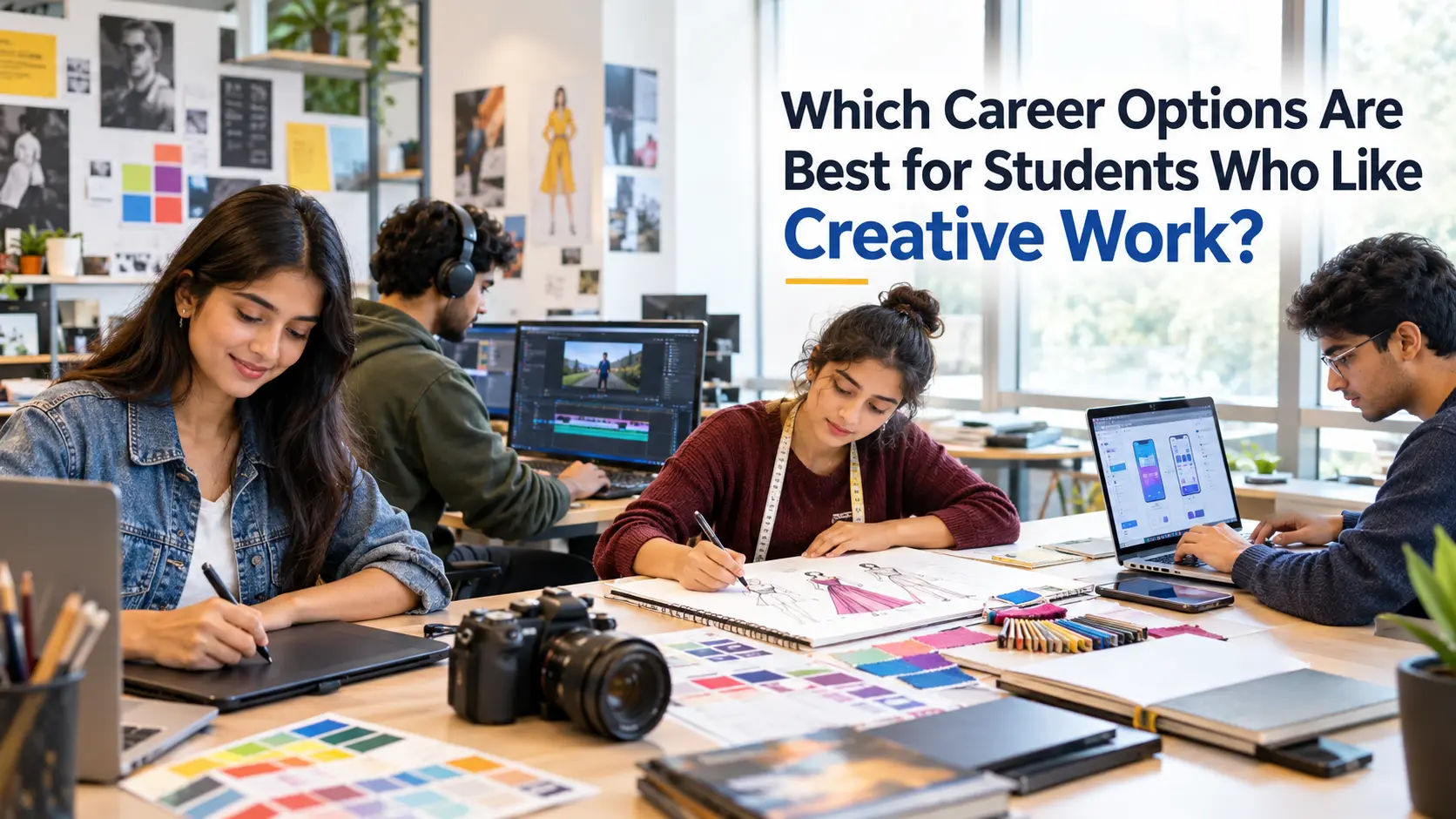
Not every student enjoys memorising formulas, solving numerical problems, or following the same routine every day. Some naturally enjoy drawing, writing, photography, video editing, storytelling, technology, fashion, design, or creating new ideas.
https://vidyaudbhav.com/blogs/which-careers-are-in-demand-worldwide
https://vidyaudbhav.com/blogs/which-course-is-easy-to-study
If that sounds familiar, you may be wondering: Which career options are best for students who like creative work?
The good news is that creativity is no longer limited to traditional art careers. Modern businesses need people who can design experiences, communicate ideas, create digital content, build brands, solve problems and understand audiences.
The World Economic Forum’s Future of Jobs Report 2025 identifies creative thinking as one of the core skills employers consider important, alongside technological literacy, analytical thinking and adaptability.
Before choosing a course, it helps to understand your interests, strengths, and preferred type of work. You can also explore this career planning guide for students for a broader framework.
What Is a Creative Career?
A creative career is a profession where generating ideas, communicating visually or verbally, designing experiences, storytelling, innovation or solving problems in original ways plays an important role.
Creative careers can involve:
- Visual design
- Writing and storytelling
- Video and film
- Advertising and branding
- User experience
- Fashion and interiors
- Digital marketing
- Animation and gaming
- Photography
- Content creation
Importantly, creative does not always mean artistic. A UX designer, marketing strategist or content strategist may use creativity every day without being a traditional artist.
Best Creative Career Options for Students
There is no single “best” creative career for everyone. The right option depends on what you enjoy creating and which skills you are willing to develop.
1. Graphic Design
Graphic design is suitable for students who enjoy colours, layouts, typography, branding and visual communication.
Graphic designers can work on:
- Social media designs
- Brand identities
- Advertisements
- Packaging
- Presentations
- Websites
- Marketing materials
A strong portfolio is often extremely important because employers and clients want to see what you can actually create.
2. UI/UX Design
If you like both creativity and technology, UI/UX design can be an interesting direction.
UI designers focus heavily on the visual appearance of digital products, while UX involves understanding how people interact with products and improving their experience.
This career combines:
- Visual thinking
- User research
- Problem-solving
- Design principles
- Technology
The U.S. Bureau of Labor Statistics projects continued growth for web developers and digital designers, although its figures represent the U.S. labour market rather than global employment.
3. Animation and Motion Design
Do you enjoy cartoons, films, games, visual effects or moving graphics?
Animation could be worth exploring.
Students can move into areas such as:
- 2D animation
- 3D animation
- Motion graphics
- Visual effects
- Game art
- Character design
- Multimedia production
You can also explore what an animation course involves before deciding whether this field matches your interests.
4. Video Editing and Film Production
Students who enjoy storytelling through video may consider video editing, filmmaking or production.
Possible work includes:
- Social media videos
- Short films
- Advertisements
- YouTube content
- Corporate videos
- Documentary production
- Motion-based marketing content
A beginner can start with small projects and gradually learn professional editing, sound, colour correction and storytelling.
5. Digital Marketing
Digital marketing is an interesting option for students who enjoy a combination of creativity, communication and technology.
Creative work can appear in:
- Social media marketing
- Content marketing
- Advertising
- Branding
- SEO content
- Email campaigns
- Video marketing
The field also requires analytical thinking because marketers need to understand audience behaviour, campaign performance and business objectives.
6. Content Creation and Copywriting
If you enjoy writing, speaking, researching or storytelling, content-related careers may suit you.
Possible roles include:
- Content writer
- Copywriter
- Scriptwriter
- Content strategist
- Social media manager
- Brand storyteller
- Creator
The key is to learn how to create content for a specific audience rather than simply producing large amounts of content.
7. Fashion Design
Fashion design can suit students interested in clothing, colours, fabrics, trends and visual concepts.
Career paths may include:
- Fashion designer
- Textile designer
- Fashion stylist
- Costume designer
- Fashion merchandiser
- Fashion entrepreneur
Creativity is important, but so are technical knowledge, market awareness and an understanding of materials.
8. Interior and Product Design
Students who enjoy spaces, objects, architecture and practical creativity can explore interior or product design.
These fields require more than making something visually attractive. Designers need to consider usability, safety, materials, cost and the needs of the end user.
Which Creative Career Should You Choose?
Here is a simple comparison:
| Drawing and visuals | Graphic Design, Illustration | Design, typography, software |
| Technology + creativity | UI/UX, Digital Design | UX, research, visual design |
| Videos and storytelling | Video Editing, Film | Editing, scripting, storytelling |
| Writing | Content, Copywriting | Research, writing, communication |
| Social media | Digital Marketing, Content | Strategy, creativity, analytics |
| Fashion | Fashion Design, Styling | Design, textiles, trends |
| Spaces | Interior Design | Planning, visualisation, design |
| Animation and games | Animation, Motion Design | Storytelling, animation software |
One thing many beginners miss is that career titles can overlap. A person might begin as a graphic designer and later move into branding, UI design, marketing or creative direction.
How to Choose a Creative Career Step by Step
Step 1: Identify What You Enjoy Creating
Ask yourself:
- Do I enjoy visuals?
- Do I prefer writing?
- Do I like making videos?
- Do I enjoy technology?
- Do I like working with people?
- Do I enjoy solving open-ended problems?
Your answers can help narrow the field.
Step 2: Test the Career Before Committing
Do not immediately spend a large amount of money on a course.
Try a small project first.
For example:
Interested in graphic design? Create five social media posts.
Interested in video editing? Edit a 30-second video.
Interested in content writing? Write three useful articles.
Interested in UI/UX? Redesign a simple mobile app screen.
This gives you real evidence about whether you enjoy the work.
Step 3: Build a Portfolio
A portfolio is one of the most useful assets for many creative careers.
Instead of saying, “I am creative,” show your work.
A beginner portfolio could contain:
- 3–5 strong projects
- A short explanation of each project
- Your role in the project
- The tools you used
- The problem you were trying to solve
- The final result
Quality matters more than filling the portfolio with dozens of average projects.
Benefits and Challenges of Creative Careers
Creative careers can offer flexibility, variety and opportunities to work across industries. Some roles also allow freelance, remote or entrepreneurial pathways.
However, they come with challenges.
Common Challenges
- Competition can be high.
- Trends change quickly.
- Software and technology evolve constantly.
- Portfolio quality matters.
- Freelance income can be inconsistent.
- Creative work can involve frequent revisions.
Practical Solution
Build creativity alongside professional discipline.
Learn communication, project management, client handling, research and basic business skills. This combination can make your creative ability more useful in the workplace.
Beginner Strategy: The 90-Day Creative Career Test
If you are completely confused, try this:
Days 1–30: Explore two or three creative fields.
Days 31–60: Choose one and complete small projects.
Days 61–90: Build a basic portfolio and seek feedback.
At the end of 90 days, ask:
- Did I enjoy the work?
- Did I improve with practice?
- Would I like to learn more?
- Can I imagine doing this professionally?
- What education or training does this career require?
This approach is more practical than choosing a course simply because it is trending.
Advanced Strategy: Combine Creativity With Technology
The future of creative work is increasingly connected with technology.
The World Economic Forum expects technological literacy, AI and big data skills to rise in importance while creative thinking, curiosity and adaptability also remain important.
That means a strong creative professional should not ignore technology.
For example:
Graphic Design + AI tools + Branding
Video Editing + Storytelling + Social Media
UI/UX + Research + AI-assisted workflows
Digital Marketing + Content + Analytics
The advantage comes from combining skills rather than depending on one tool.
Tools Students Can Explore
The best tool depends on the career you choose.
Beginner-Friendly Options
- Canva
- Adobe Express
- CapCut
- Figma
Professional Options
- Adobe Photoshop
- Adobe Illustrator
- Adobe Premiere Pro
- Adobe After Effects
Learning and Portfolio Platforms
- Behance
- YouTube
The tool itself does not create a successful career. Your ability to solve problems and produce useful work matters more.
Common Mistakes to Avoid
Choosing Only Because a Career Is Trending
A popular career may still be unsuitable for you.
Thinking Creativity Means No Technical Skills
Modern creative jobs often require software, research, analytics and technology.
Ignoring Communication
A brilliant designer who cannot explain ideas clearly may struggle with clients or teams.
Building a Portfolio Too Late
Start documenting your projects while learning.
Comparing Yourself With Professionals
Do not compare your first project with someone else's tenth year of experience.
Expert Tips for Creative Students
Here is what actually works:
- Practice consistently instead of waiting for inspiration.
- Study professional work and understand why it works.
- Learn the fundamentals before relying heavily on templates or AI.
- Build projects around real-world problems.
- Ask for constructive feedback.
- Keep improving your communication skills.
- Learn basic business and marketing concepts.
- Follow changes in technology.
- Keep your portfolio updated.
For broader career decision-making, you can also use Vidya Udbhav's guide on choosing a career based on your interests and skills.
Future Trends in Creative Careers
Creative work is changing rather than simply disappearing.
AI is making some production tasks faster, but students still need originality, judgement, communication and the ability to understand people.
This is why combining creative thinking + technology + domain knowledge is becoming increasingly useful.
Even outside traditional design, creativity is valuable in marketing, business, education, technology and product development.
FAQ
1. Which career is best for a creative student?
There is no single best career. Graphic design, UI/UX, animation, video editing, digital marketing, content creation, fashion and interior design are among the fields worth exploring.
2. Can creative students have successful careers?
Yes. Creative skills are used across design, technology, marketing, media, entertainment and many other industries. Success usually depends on skills, experience, adaptability and the ability to solve real problems.
3. Which creative career is suitable for students who like technology?
UI/UX design, digital design, animation, motion graphics, game design and digital marketing can combine creativity with technology.
4. Can I build a creative career without being good at maths?
Many creative careers do not require advanced mathematics. However, basic numerical and analytical skills can still be useful, particularly in marketing, business and project management. Students can also explore courses for students who are not strong in mathematics.
5. Should I choose a creative course after Class 12?
It can be a good option if the subject matches your interests, abilities and career goals. Research the curriculum, career paths, practical exposure and portfolio opportunities before enrolling.
6. Is a degree necessary for a creative career?
It depends on the profession and employer. Some creative fields place strong emphasis on portfolios and practical ability, while others may require formal qualifications. Check the requirements of the specific career you want to pursue.
Final Advice
If you love creative work, do not assume that your only choices are “artist” or “designer.”
The modern creative economy includes design, technology, marketing, media, animation, content, fashion, user experience and many hybrid careers.
Start with curiosity rather than pressure. Explore different fields, test your interests through small projects, learn useful tools and build a portfolio.
Most importantly, choose a career based on the combination of what you enjoy, what you can become good at, and what the market needs.
For students still comparing different paths, career guidance and planning resources from Vidya Udbhav can provide a useful starting point.
Your creative interest can become a career—but the next step is turning that interest into a practical, marketable skill.