

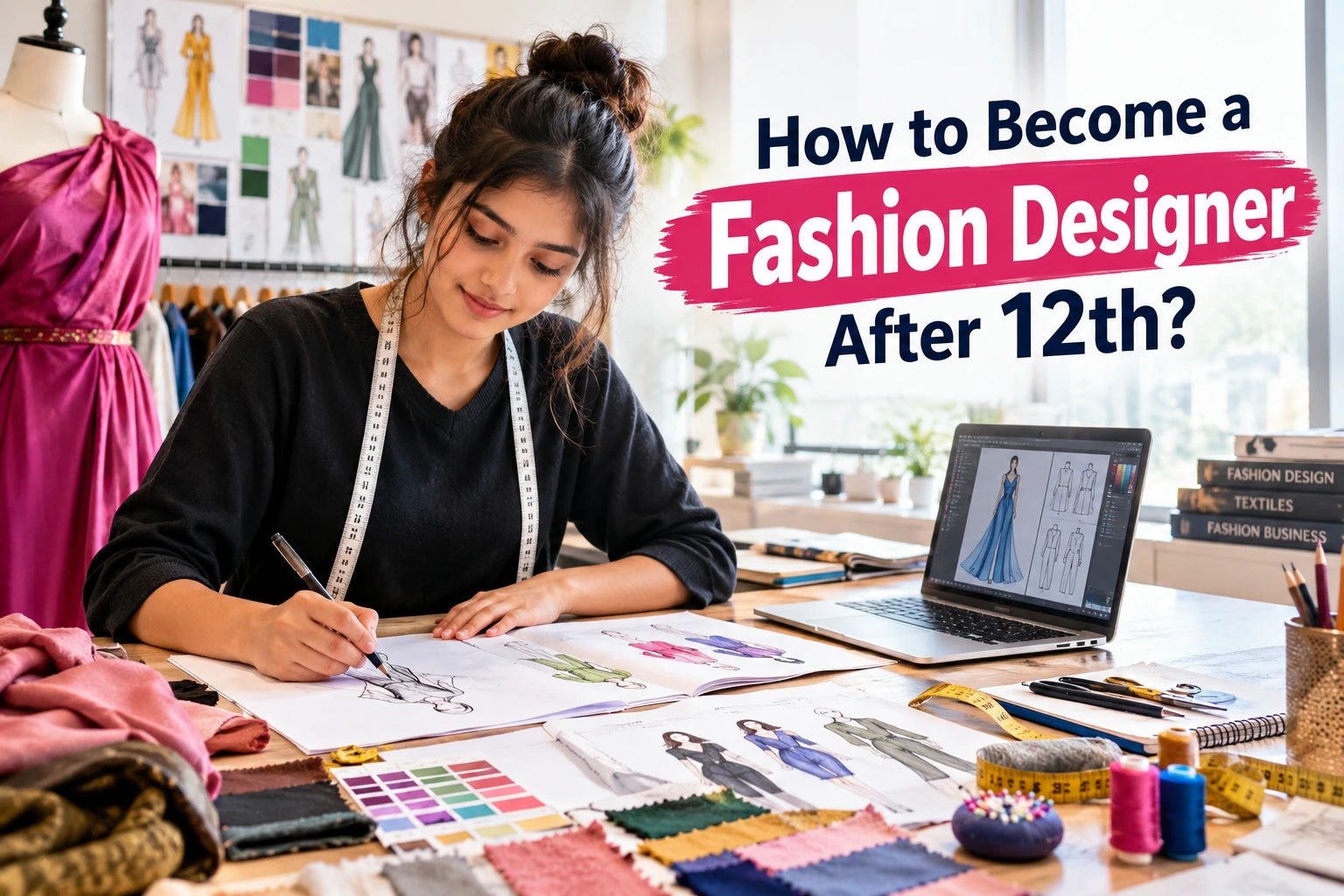
If you have just completed Class 12 and love clothes, colours, fabrics, styling, or creative work, you may be wondering how to become a fashion designer after 12th. The good news is that fashion design is open to students from different academic backgrounds, as long as they develop the right mix of creativity, technical knowledge, and practical skills.
https://vidyaudbhav.com/blogs/how-to-become-travel-tourism-professional-after-12th
https://vidyaudbhav.com/blogs/hotel-management-vs-bba-career-management
Fashion design is much more than sketching attractive outfits. A professional designer needs to understand fabrics, garment construction, colour theory, trends, customer preferences, fashion business, and increasingly, digital design tools.
This guide explains the complete path to becoming a fashion designer after 12th, including courses, eligibility, skills, career options, portfolio development, mistakes to avoid, and future opportunities.
Quick Answer: How Can You Become a Fashion Designer After 12th?
The usual pathway is:
- Complete Class 12 from a recognised board.
- Explore fashion design as a career and understand the specialisation you prefer.
- Choose a suitable fashion design degree, diploma, or certificate course.
- Learn fashion illustration, textiles, pattern making, garment construction, and design software.
- Build a strong portfolio during your studies.
- Complete internships or practical projects.
- Apply for entry-level fashion roles or start freelance/entrepreneurial work.
- Continue developing your skills and industry network.
The exact eligibility, entrance requirements, duration, and admission process depend on the institution and course.
What Does a Fashion Designer Actually Do?
A fashion designer develops ideas for clothing and accessories and turns those ideas into workable designs.
Their work can include:
- Researching fashion trends
- Creating mood boards
- Sketching garments
- Selecting fabrics and colours
- Developing prints and patterns
- Creating prototypes
- Working with tailors and production teams
- Modifying designs after fittings
- Preparing collections
- Understanding customer preferences
- Working with brands, retailers, or individual clients
One thing many beginners miss is that fashion design combines creative thinking with technical execution. Having good taste helps, but knowing how to convert an idea into a wearable garment is equally important.
Which Course Should You Choose After 12th for Fashion Design?
Students can consider several educational routes depending on their career goals.
| Bachelor’s Degree in Fashion Design | Students seeking comprehensive undergraduate education | Design, textiles, construction, portfolio, industry exposure |
| Diploma in Fashion Design | Students wanting a more focused route | Practical design and production skills |
| Certificate Course | Beginners exploring the field | Specific skills or introductory learning |
| Short-Term Skill Courses | Students wanting additional expertise | Illustration, styling, CAD, textiles, etc. |
A degree can provide broader academic and industry exposure, while a diploma or certificate may be useful when you want to develop specific skills more quickly.
Before selecting a college, compare curriculum, faculty, practical facilities, internship opportunities, portfolio development, fees, location, and admission requirements.
Can Arts, Commerce, and Science Students Become Fashion Designers?
Yes. Fashion design is not limited to one school stream.
Students from:
- Arts/Humanities
- Commerce
- Science
may be eligible for different fashion-related undergraduate programs, depending on the institution's requirements.
For students interested in creative careers, fashion design can be considered alongside other options such as graphic design, interior design, animation, media, and UX/UI.
If you are still comparing career directions after Class 12, explore this [career options after 12th guide] as part of your broader planning process.
Step-by-Step Guide to Becoming a Fashion Designer After 12th
Step 1: Understand Your Interest
Ask yourself what attracts you to fashion.
Do you enjoy:
- Drawing clothes?
- Styling people?
- Experimenting with colours?
- Learning about fabrics?
- Creating new designs?
- Following fashion trends?
- Working with your hands?
You do not need to be an expert before joining a course. However, genuine curiosity will make the learning process easier.
Step 2: Choose Your Fashion Specialisation
Fashion is a broad industry.
Possible areas include:
- Apparel design
- Fashion illustration
- Textile design
- Fashion styling
- Costume design
- Accessories design
- Fashion merchandising
- Fashion communication
- Fashion entrepreneurship
Start broad if you are unsure. Specialisation can develop as you gain experience.
Step 3: Learn the Technical Fundamentals
Here is where many people make mistakes. They focus heavily on sketches but ignore construction.
A serious fashion student should gradually learn:
- Fashion illustration
- Colour theory
- Fabric knowledge
- Pattern making
- Draping
- Garment construction
- Sewing fundamentals
- Fashion history
- Trend research
- Basic digital design
You do not have to master everything immediately. Build one skill at a time.
Step 4: Build a Fashion Portfolio
Your portfolio is one of the most important assets you can develop.
Include work such as:
- Fashion sketches
- Design concepts
- Mood boards
- Colour palettes
- Textile experiments
- Garment projects
- Digital designs
- Finished outfits
- Before-and-after development of a concept
A portfolio should show how you think, not just the final image.
For example, instead of showing only a finished dress, show the inspiration, colour selection, sketches, fabric choice, development process, and final garment.
Step 5: Gain Practical Experience
Classroom learning is only one part of becoming a designer.
Try to gain experience through:
- Internships
- College projects
- Fashion exhibitions
- Student competitions
- Boutique projects
- Freelance assignments
- Styling collaborations
- Personal collections
Real-world experience teaches things that textbooks cannot fully explain, such as client communication, deadlines, revisions, costing, and production challenges.
Step 6: Develop Digital Fashion Skills
Fashion is increasingly connected with digital technology.
Depending on your specialisation, learning design and visualisation software can help you present ideas professionally.
Useful areas include:
- Digital illustration
- CAD-based fashion design
- Image editing
- Presentation design
- Digital portfolio creation
- 3D garment visualisation
You can begin with beginner-friendly software and gradually move to professional tools as your requirements increase.
What Skills Are Needed to Become a Fashion Designer?
Successful fashion designers usually develop a combination of creative and practical abilities.
Creative Skills
- Creativity
- Colour sense
- Visual imagination
- Drawing
- Trend awareness
- Storytelling through design
Technical Skills
- Pattern making
- Garment construction
- Fabric knowledge
- Draping
- Digital design
Professional Skills
- Communication
- Time management
- Client handling
- Teamwork
- Presentation
- Business awareness
This combination matters because fashion is both an artistic field and a commercial industry.
Career Options After Fashion Design
A fashion design education can lead to several career directions.
Possible roles include:
- Fashion Designer
- Assistant Fashion Designer
- Fashion Stylist
- Textile Designer
- Costume Designer
- Fashion Illustrator
- Fashion Merchandiser
- Fashion Consultant
- Product Developer
- Fashion Visualizer
- Fashion Entrepreneur
Some professionals work with established brands, while others build independent labels, boutiques, online stores, or freelance careers.
Benefits of Choosing Fashion Designing After 12th
Fashion design can offer:
- Creative career opportunities
- Multiple specialisation options
- Freelance possibilities
- Entrepreneurship opportunities
- Opportunities to work with brands
- International exposure
- Scope to build a personal brand
- Opportunities across apparel, accessories, textiles, styling, and media
However, these opportunities depend heavily on your skills, portfolio, experience, professional network, and ability to understand the market.
Challenges You Should Know Before Choosing Fashion Design
Fashion can be exciting, but it is not an effortless career.
Common challenges include:
- High competition
- Tight deadlines
- Frequent revisions
- Changing consumer preferences
- Pressure to remain creative
- Need for continuous learning.
- Difficulty getting noticed without a portfolio
The practical solution is to start building industry-ready skills while studying rather than waiting until graduation.
Real-Life Example: A Student Starting After 12th
Imagine a Class 12 student who loves ethnic clothing and wants to create a clothing label.
Instead of immediately starting a business, she could first study fashion design, learn textile basics, practise illustration, understand garment construction, and create a small portfolio.
During college, she could complete internships and document her projects. Later, she could combine design knowledge with social media, photography, branding, and e-commerce skills to launch a small collection.
This approach creates a stronger foundation than simply following fashion trends on social media.
Beginner Strategy: What Should You Do in Your First Year?
If you are just starting, keep your plan simple.
Months 1–3: Learn drawing, colour theory, fabrics, and fashion terminology.
Months 4–6: Practise garment sketches, mood boards, and basic construction.
Months 7–9: Start creating complete design concepts and small projects.
Months 10–12: Build and refine your portfolio and search for practical experience.
Consistency matters more than trying to learn everything at once.
Advanced Strategy for Students Who Want to Stand Out
Once your fundamentals are strong, start thinking beyond traditional design.
Explore:
- Sustainable fashion
- Digital fashion
- 3D design
- Fashion technology
- Personal branding
- Fashion e-commerce
- Social media marketing
- Consumer research
- Fashion entrepreneurship
One designer may be highly skilled technically but struggle to communicate their work. Another may have average drawing skills but build a strong brand and understand customers exceptionally well.
The strongest career development often comes from combining design expertise with complementary skills.
Tools and Platforms Fashion Students Can Explore
Depending on your level and specialisation, useful tools may include:
Beginner-friendly: Canva, Sketchbook
Digital design: Adobe Illustrator, Adobe Photoshop
Fashion/CAD: CLO 3D, Browzwear
Portfolio and professional networking: Behance, LinkedIn
The best tool is not necessarily the most expensive one. Choose based on what you need to learn and what your course or workplace uses.
Mistakes to Avoid
Choosing a Course Only Because It Looks Glamorous
Fashion involves research, technical work, production, revisions, and deadlines—not only runway shows.
Ignoring the Portfolio
A degree can support your education, but your portfolio demonstrates what you can actually create.
Copying Trends Without Developing Your Own Style
Study trends, but learn why they work. Gradually develop your own visual identity.
Ignoring Business Skills
If you want to launch a fashion label, learn about pricing, sourcing, marketing, customer research, and basic financial management.
Waiting Until Graduation to Gain Experience
Start projects, internships, competitions, or collaborations as early as possible.
Expert Tips for Aspiring Fashion Designers
- Keep a visual inspiration journal.
- Photograph your projects professionally.
- Document your design process.
- Learn basic sewing even if you want to become a creative director.
- Follow international and local fashion movements.
- Understand fabrics before designing complicated garments.
- Practise explaining the story behind every collection.
- Build relationships with classmates, mentors, photographers, stylists, and makers.
- Keep updating your portfolio.
- Learn complementary digital and business skills.
Future Trends in Fashion Design
The fashion industry is changing through technology, sustainability, e-commerce, digital visualisation, and changing consumer behaviour.
Designers increasingly need to understand more than clothing aesthetics. Digital presentation, online branding, customer research, sustainable materials, and technology-assisted design are becoming important areas of professional development.
For students, this means the future of fashion design may reward people who combine creative ability, technical knowledge, digital skills, and business awareness.
How to Choose the Right Fashion Design Course
Before taking admission, create a simple checklist:
- Check eligibility requirements.
- Review the complete curriculum.
- Compare practical training.
- Check portfolio development opportunities.
- Understand total fees.
- Ask about internships and industry exposure.
- Research faculty and facilities.
- Consider location and accessibility.
- Compare career support.
- Think about your long-term specialisation.
If you are confused between fashion design and other career options, systematic career planning can help you compare your interests, strengths, educational choices, and future goals.
Frequently Asked Questions
1. Can I become a fashion designer after 12th?
Yes. Students can pursue fashion design through undergraduate degrees, diplomas, certificates, or specialised training, depending on their eligibility and career goals.
2. Which stream is best for fashion designing after 12th?
Fashion design is not necessarily restricted to one stream. Arts, Commerce, and Science students may find eligible programs, but specific requirements vary by institution.
3. Is fashion designing a good career after 12th?
Fashion design can provide careers in design, styling, textiles, merchandising, costume design, product development, and entrepreneurship. Career outcomes depend on skills, portfolio, experience, and specialisation.
4. Do I need to know drawing before joining fashion design?
Strong drawing skills are helpful, but you do not need to be an expert initially. Fashion education can help you develop illustration and visual communication skills.
5. What skills should I learn to become a fashion designer?
Important skills include fashion illustration, colour theory, textile knowledge, pattern making, garment construction, digital design, communication, research, and portfolio development.
6. Can I start my own fashion brand after studying fashion design?
Yes. Fashion education can provide a foundation for entrepreneurship, but running a brand also requires knowledge of sourcing, production, pricing, marketing, sales, finance, and customer management.
7. Can fashion designers work internationally?
Yes. Fashion is a global industry, and designers may work with international brands, clients, manufacturers, retailers, or digital platforms. Requirements and opportunities vary by country.
Final Advice
Becoming a fashion designer after 12th is not about having perfect sketches on day one. It is about developing an eye for design, learning the technical side of fashion, building a portfolio, gaining practical experience, and continuously improving.
Start by understanding your interests and comparing suitable courses. Then focus on skills and real projects rather than relying only on a qualification.
If you are still deciding what to study after Class 12, explore broader [career planning resources] and compare fashion design with other creative and professional pathways before making your final course decision.
Conclusion
If fashion genuinely interests you, Class 12 can be the beginning of an exciting creative career.
Choose your course carefully, learn the fundamentals, build a strong portfolio, gain practical exposure, and stay open to technology and new areas of the fashion industry.
Your first course is only the starting point. The skills, experience, creativity, and professional identity you build afterwards will play a major role in shaping your career as a fashion designer.