

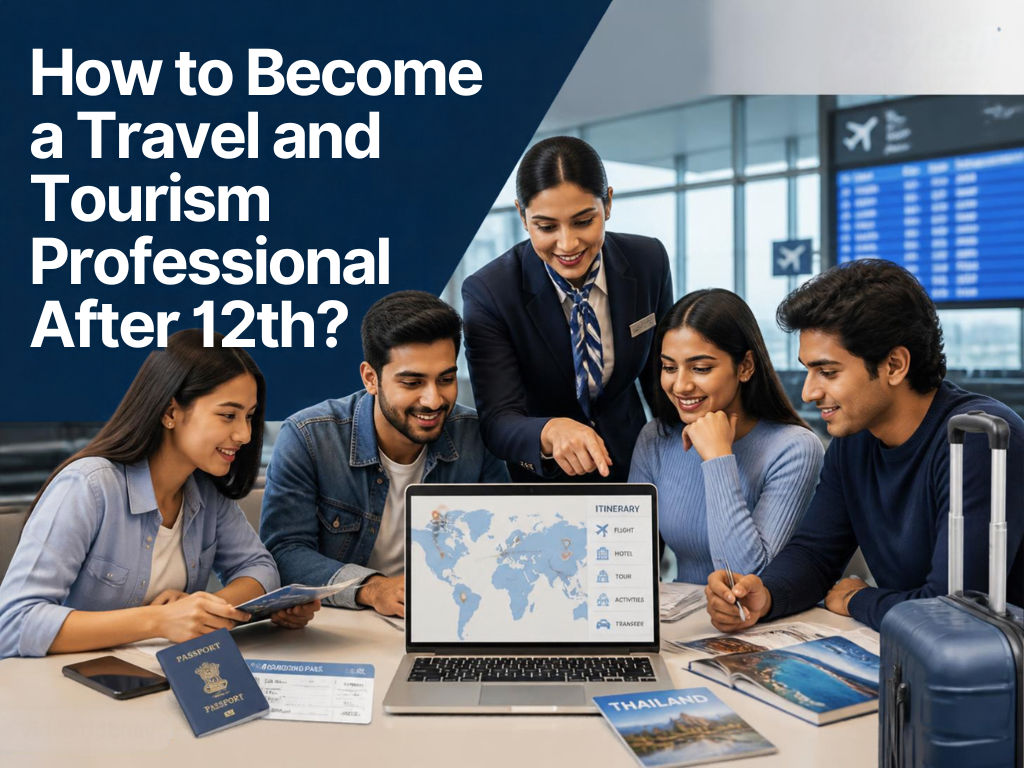
If you enjoy travelling, meeting people, learning about different cultures, organising trips, or working in a fast-moving service industry, travel and tourism can be an exciting career option after 12th.
But becoming a travel and tourism professional is about much more than travelling for free. The industry needs people who can plan itineraries, communicate with customers, manage bookings, understand destinations, solve problems and create smooth travel experiences.
https://vidyaudbhav.com/blogs/how-long-does-it-take-to-become-a-lawyer
https://vidyaudbhav.com/blogs/can-i-get-a-job-after-learning-digital-marketing2
The good news is that students from different academic backgrounds can enter this field through degree, diploma or certificate programmes. Several recognised career resources also list roles such as travel consultant, tour operator, tourism manager, airline staff, travel executive and tourist guide as potential career paths.
If you are wondering how to start a career in travel and tourism after 12th, here is a practical roadmap.
What Does a Travel and Tourism Professional Do?
A travel and tourism professional helps people plan, organise, manage or experience travel.
Depending on the job, responsibilities may include:
- Planning domestic or international trips
- Creating travel itineraries
- Booking flights, hotels and other services
- Assisting customers with travel requirements
- Coordinating tours and group travel
- Managing destination-related information
- Working with hotels, airlines and travel agencies
- Handling customer queries and complaints
- Promoting destinations and travel packages
- Managing travel operations
The industry also connects with hospitality, aviation, events, transportation, destination management and tourism marketing.
Why Choose Travel and Tourism After 12th?
Travel and tourism suits students who prefer a people-oriented, dynamic work environment.
Some potential advantages include:
- Multiple career pathways
- Opportunities to work with international customers
- Exposure to different cultures
- Scope across travel agencies, airlines, hotels and tourism organisations
- Opportunities in both private and public-sector environments
- Possibility of entrepreneurship
- Career options that combine communication, management and creativity
The Central Board of Secondary Education's tourism curriculum identifies careers including travel consultant, travel executive, tour operator, tourism manager, airline staff, tourist guide and event manager.
Best Travel and Tourism Courses After 12th
There is no single course that everyone must choose. The right programme depends on your career goal, budget, preferred duration and the type of work you want to do.
| Bachelor's Degree in Tourism | 3 years | Students seeking a broad academic foundation |
| BBA in Travel & Tourism | 3 years | Students interested in management and business |
| B.Sc. Travel & Tourism | 3 years | Students interested in tourism operations and management |
| B.Com Travel & Tourism | 3 years | Students interested in commerce and tourism |
| Diploma in Travel & Tourism | 1–2 years | Students wanting practical training in less time |
| Certificate Course | 6 months–1 year | Students wanting focused or additional skills |
Course names, eligibility and duration can vary between institutions, so always check the current admission requirements before applying. Current career-education sources list bachelor's, diploma and certificate routes for students after 12th.
Step-by-Step Guide to Becoming a Travel and Tourism Professional
1. Complete Your 12th
The first step is completing Class 12 from a recognised board.
Students from Arts, Commerce and Science backgrounds may find relevant tourism programmes, although specific eligibility requirements depend on the institution and course.
For example, India's Directorate General of Employment lists bachelor's-level tourism programmes for students who have completed 12th.
2. Identify Your Career Interest
Before choosing a course, ask yourself what type of work attracts you.
Do you enjoy:
- Planning trips?
- Talking to customers?
- Working at airports?
- Managing hotels?
- Organising events?
- Exploring destinations?
- Creating travel content?
- Running a business?
Your answer can help narrow down your course and career direction.
3. Choose the Right Course
A degree can provide broader academic and management knowledge, while a diploma or certificate may allow you to develop specific skills in a shorter period.
Here is what actually works: choose the course based on the career role you want, not simply because the course title sounds attractive.
4. Build Practical Skills
A qualification alone does not make someone job-ready.
Develop skills such as:
- Communication
- Customer service
- Travel planning
- Destination knowledge
- Problem-solving
- Basic computer skills
- Booking and reservation knowledge
- Sales and negotiation
- Digital marketing
- Foreign-language communication
- Time management
One thing many beginners miss is the importance of communication. A travel professional may deal with customers, hotels, transport providers and other partners every day.
5. Gain Industry Exposure
Internships and practical projects can help you understand how the industry operates.
Try to gain exposure through travel agencies, hotels, tourism companies, event organisations or other relevant businesses.
Practical experience can also help you understand whether you prefer sales, operations, customer service or destination management.
6. Start Applying for Entry-Level Roles
After developing your academic and practical foundation, explore roles such as:
- Travel Consultant
- Travel Executive
- Tour Coordinator
- Travel Agent
- Tour Operator
- Customer Service Executive
- Airport Ground Staff
- Destination Executive
- Tourism Coordinator
- Event Coordinator
Career resources also identify travel planners, transport officers and tourism-related management roles as possible career paths.
Skills You Need for a Successful Tourism Career
A strong tourism professional combines technical knowledge with people skills.
Communication
You need to explain information clearly and professionally to customers.
Customer Service
Travel plans can change unexpectedly. Patience and problem-solving are essential when customers face delays, cancellations or booking issues.
Organisation
A single itinerary may involve flights, hotels, transportation, activities and multiple travellers.
Digital Skills
Modern tourism increasingly depends on digital booking systems, online communication, social media and digital marketing.
Cultural Awareness
Tourism professionals work with people from different cultures and backgrounds. Respectful communication is an important professional skill.
Sales Skills
Many travel roles involve recommending packages, upgrades or additional services while understanding the customer's actual needs.
Career Opportunities in Travel and Tourism
A tourism qualification does not lock you into one job.
You could work in:
Travel Agencies:
Travel consultant, travel executive, ticketing executive or tour coordinator.
Travel consultant, travel executive, ticketing executive or tour coordinator.
Airlines and Airports:
Customer service, ground operations and passenger-support roles.
Customer service, ground operations and passenger-support roles.
Hotels and Hospitality:
Guest relations, reservations, sales and hospitality operations.
Guest relations, reservations, sales and hospitality operations.
Tour Operations:
Tour planning, group coordination and destination operations.
Tour planning, group coordination and destination operations.
Events:
Conference, exhibition, wedding and corporate-event coordination.
Conference, exhibition, wedding and corporate-event coordination.
Destination Management:
Managing tourism experiences, local activities and destination services.
Managing tourism experiences, local activities and destination services.
Entrepreneurship:
With experience and business knowledge, some professionals establish travel agencies, tour businesses or specialised travel services.
With experience and business knowledge, some professionals establish travel agencies, tour businesses or specialised travel services.
Benefits and Challenges of a Tourism Career
Benefits
- Diverse career options
- International exposure
- People-focused work
- Opportunities to specialise
- Potential for entrepreneurship
- Dynamic working environment
Challenges
Travel and tourism can also be demanding.
Working hours may vary, especially in customer-facing roles. Weekends, holidays and peak travel seasons can be busy. Customer complaints, cancellations and last-minute changes are also part of the industry.
This is why choosing tourism simply because you “love travelling” can be misleading. You should also enjoy planning, communication, coordination and problem-solving.
Degree vs Diploma: Which Route Should You Consider?
There is no universal answer.
A degree may be more suitable if you want broader academic knowledge and plan to pursue higher studies or management-oriented opportunities.
A diploma can be useful if you want focused, practical training and want to enter the workforce sooner.
A certificate can work well for specialised skills or as an additional qualification.
Your decision should consider course curriculum, practical training, internships, institutional reputation, affordability and your long-term career plan.
Tools and Platforms to Learn
Students can supplement formal education with digital learning resources.
Beginner-Friendly
- Canva
- Google Workspace
- Microsoft Excel
- Google Maps
Travel and Industry Skills
- Amadeus
- Sabre
- Galileo
Digital Career Skills
- Google Analytics
- Meta Business Suite
- Microsoft PowerPoint
The specific tools required will depend on your target role. Someone working in travel operations may need different software knowledge from someone working in tourism marketing.
Beginner Strategy: Build Your Career Step by Step
If you are completely new to this field, avoid trying to learn everything simultaneously.
Start with:
- Understand the travel and tourism industry.
- Research different career roles.
- Select a suitable course.
- Improve English and communication skills.
- Learn basic travel planning.
- Gain internship experience.
- Develop digital skills.
- Build a professional resume.
- Apply for entry-level opportunities.
- Continue learning after getting your first job.
For broader guidance on selecting courses and planning your education journey, students can also explore the career planning resources on Vidya Udbhav.
Advanced Strategy for Career Growth
Once you have basic experience, specialise.
Possible areas include:
- Luxury travel
- Corporate travel
- Adventure tourism
- Eco-tourism
- Destination management
- International tourism
- Travel technology
- Tourism marketing
- Event tourism
- Cruise tourism
Specialisation can help you develop a clearer professional identity instead of remaining a generalist throughout your career.
Mistakes to Avoid
Here is where many students make mistakes:
Choosing a course only because it sounds exciting:
Research the actual curriculum and career outcomes.
Research the actual curriculum and career outcomes.
Ignoring communication skills:
Tourism is heavily customer-facing.
Tourism is heavily customer-facing.
Skipping internships:
Classroom knowledge and real-world operations are different.
Classroom knowledge and real-world operations are different.
Expecting instant high salaries:
Career progression depends on role, location, skills and experience.
Career progression depends on role, location, skills and experience.
Learning only theory:
Practical exposure matters greatly in service industries.
Practical exposure matters greatly in service industries.
Not researching institutions:
Compare curriculum, training, internships, facilities and eligibility before applying.
Compare curriculum, training, internships, facilities and eligibility before applying.
Expert Tips for Students After 12th
A few practical habits can make a significant difference.
Read about destinations regularly.
Understand geography, culture, attractions, seasons and travel patterns.
Understand geography, culture, attractions, seasons and travel patterns.
Improve your communication.
Practise explaining itineraries and travel information clearly.
Practise explaining itineraries and travel information clearly.
Learn another language if possible.
Language skills can become valuable when working with international travellers.
Language skills can become valuable when working with international travellers.
Follow tourism trends.
Understand sustainable tourism, digital booking, experiential travel and changing customer expectations.
Understand sustainable tourism, digital booking, experiential travel and changing customer expectations.
Create practical projects.
Design sample itineraries, destination guides or travel packages. These can demonstrate your skills during interviews.
Design sample itineraries, destination guides or travel packages. These can demonstrate your skills during interviews.
Think beyond traditional travel agencies.
Tourism intersects with technology, hospitality, events, marketing, transportation and content creation.
Tourism intersects with technology, hospitality, events, marketing, transportation and content creation.
Future Trends in Travel and Tourism
The industry is becoming increasingly digital.
Travellers now research destinations online, compare experiences, use mobile booking platforms and expect quick customer support.
At the same time, areas such as sustainable tourism, personalised travel, experience-based tourism, wellness travel and technology-enabled travel services continue to influence the sector.
This means future professionals may need a combination of tourism knowledge + digital skills + communication + customer experience expertise.
Quick Career Roadmap
12th → Choose Tourism Course → Build Skills → Internship → Entry-Level Job → Specialisation → Experience → Management/Entrepreneurship
The journey does not have to be identical for every student.
Some may choose a bachelor's degree, while others may begin with a diploma and add specialised qualifications later.
Frequently Asked Questions
1. Can I pursue travel and tourism after 12th?
Yes. Students can explore bachelor's, diploma and certificate-level programmes in travel and tourism, depending on their academic background and the eligibility criteria of the institution.
2. Which stream is required for travel and tourism courses after 12th?
Many tourism programmes accept students from different streams, but eligibility varies by course and institution. Always check the current requirements before applying.
3. What jobs can I get after a travel and tourism course?
Possible roles include travel consultant, travel executive, tour operator, tour coordinator, tourism coordinator, customer service executive and destination-related roles.
4. Is travel and tourism a good career for students who love travelling?
It can be suitable, but professional tourism involves much more than travelling. Customer service, planning, coordination, sales and problem-solving are important parts of many roles.
5. Is a degree necessary for a career in tourism?
Not always. Diploma and certificate routes can also provide relevant skills. However, a degree may provide broader academic and management preparation depending on your career goals.
6. Can I work internationally after studying tourism?
Tourism is an international industry, but overseas employment depends on factors such as qualifications, skills, experience, employer requirements and local work regulations.
7. Can I start my own travel business?
Yes. With appropriate industry knowledge, experience, business planning and compliance with applicable requirements, tourism professionals can explore entrepreneurship.
Final Advice for Students
If you are asking how to become a travel and tourism professional after 12th, start by looking beyond the idea of simply travelling for work.
A successful tourism career is built around people, planning, service, communication and problem-solving.
Choose an education pathway that matches your goals, gain practical experience early, develop digital skills and keep learning about the industry.
Most importantly, do not rush into choosing a course. Compare the curriculum, practical exposure, career opportunities, costs and eligibility requirements before making your decision.
For personalised education and career guidance, students can explore Vidya Udbhav's career guidance resources and use them as part of their course-selection process.