

Introduction
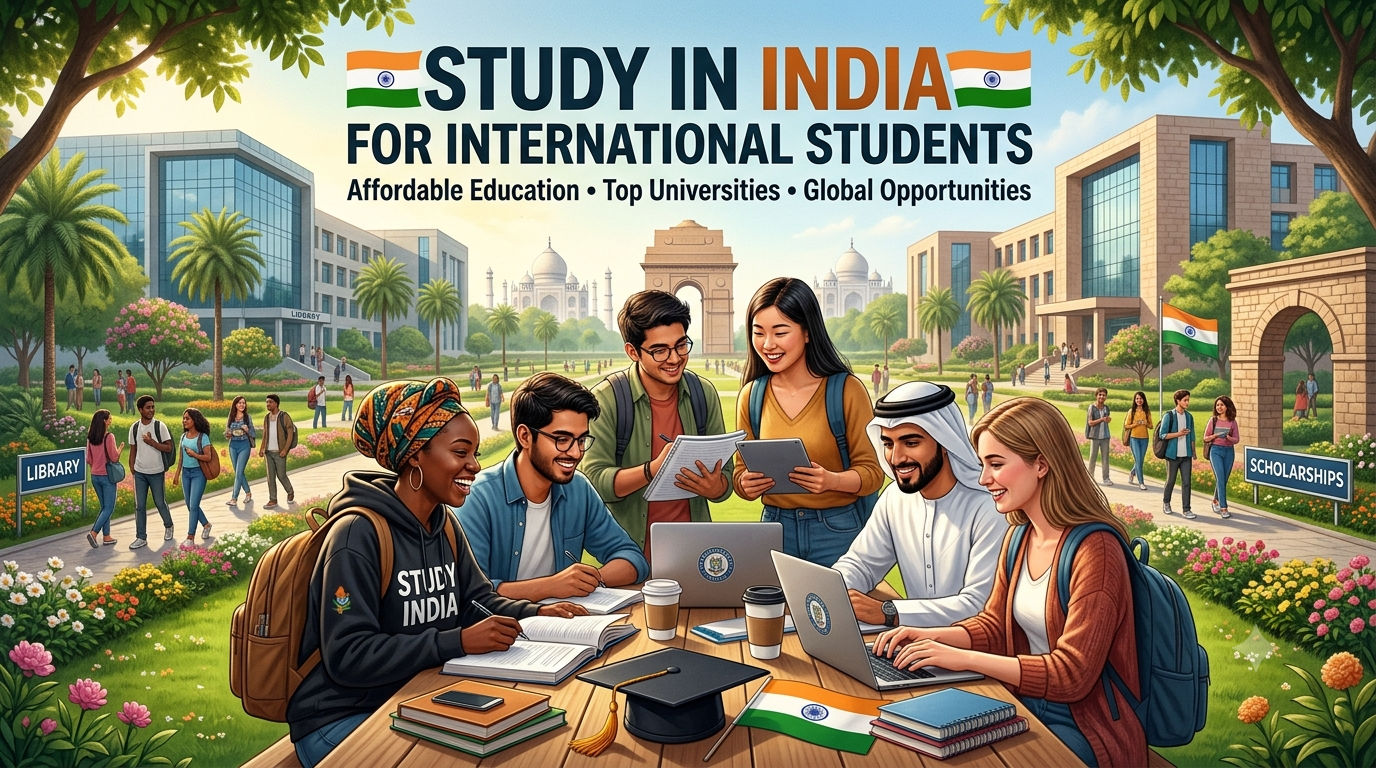
India has emerged as one of the world's fastest-growing education destinations for international students. With globally recognized universities, affordable tuition fees, English-medium education, and a rich cultural heritage, India attracts thousands of students from Asia, Africa, Europe, and the Middle East every year.
Whether you want to pursue engineering, medicine, management, computer science, humanities, or research programs, India offers world-class educational opportunities at a fraction of the cost compared to many Western countries.
If you're considering studying abroad, India may be the perfect combination of quality education, affordability, and cultural diversity.
Quick Answer: Why Study in India?
International students choose India because of:
- Affordable tuition fees
- Globally recognized degrees
- English-medium education
- Diverse course options
- Top-ranked universities
- Scholarship opportunities
- Growing career prospects
- Rich cultural experiences
- Safe and welcoming environment
- Strong research opportunities
Understanding Higher Education in India
India has one of the largest higher education systems in the world.
Students can choose from:
- Undergraduate Programs (UG)
- Postgraduate Programs (PG)
- Diploma Programs
- Doctoral Programs (PhD)
- Research Fellowships
- Professional Certifications
The education system is regulated by recognized bodies that ensure quality standards across institutions.
Top Universities in India for International Students
1. Indian Institutes of Technology (IITs)
Known worldwide for engineering and technology programs.
2. Indian Institutes of Management (IIMs)
Among the best institutions for business and management studies.
3. University of Delhi
Popular for arts, commerce, science, and social science programs.
4. Jawaharlal Nehru University (JNU)
Renowned for research and higher education.
5. Banaras Hindu University (BHU)
One of Asia's largest residential universities.
6. VIT University
Popular among international students for technology programs.
7. Manipal Academy of Higher Education
Offers globally recognized programs across disciplines.
8. Amity University
Known for international collaborations and modern infrastructure.
Best Courses for International Students in India
Engineering and Technology
Popular specializations include:
- Computer Science
- Artificial Intelligence
- Data Science
- Mechanical Engineering
- Civil Engineering
Medical and Healthcare Programs
- MBBS
- BDS
- Nursing
- Pharmacy
- Public Health
Business and Management
- BBA
- MBA
- Business Analytics
- International Business
Computer Applications
- BCA
- MCA
- Software Engineering
- Cybersecurity
Humanities and Social Sciences
- Economics
- Political Science
- Psychology
- Sociology
Admission Process for International Students
Step 1: Choose a Course
Research universities and programs that align with your career goals.
Step 2: Check Eligibility
Review academic and language requirements.
Step 3: Submit Application
Apply through the university's admission portal.
Step 4: Receive Offer Letter
Qualified applicants receive admission confirmation.
Step 5: Apply for Student Visa
Apply through the nearest Indian Embassy or Consulate.
Step 6: Travel and Enroll
Complete registration and begin your studies.
Student Visa Requirements for India
International students typically need:
- Valid Passport
- Admission Letter
- Passport-Sized Photographs
- Financial Proof
- Visa Application Form
- Academic Documents
Students should ensure all documents are prepared before applying.
Cost of Studying in India
Tuition Fees
Average annual tuition fees:
| Program | Average Cost |
|---|---|
| Undergraduate | $1,000 – $5,000 |
| Postgraduate | $1,500 – $8,000 |
| MBA | $2,000 – $12,000 |
| Medical Programs | Varies by Institution |
Living Expenses
Monthly living costs generally range between:
- Accommodation: $50–$250
- Food: $50–$150
- Transportation: $10–$50
- Miscellaneous: $50–$100
India remains one of the most affordable study destinations globally.
Scholarships for International Students
Several scholarships help reduce educational costs.
Popular Scholarship Programs
- Study in India Scholarships
- ICCR Scholarships
- Government Scholarships
- University-Specific Merit Scholarships
- Research Fellowships
Scholarships may cover tuition fees, accommodation, and living expenses.
Student Life in India
International students enjoy:
- Cultural Festivals
- Sports Activities
- Student Clubs
- Research Opportunities
- Internship Programs
- Networking Events
India offers a unique blend of tradition and modernity that enriches the student experience.
Work Opportunities During and After Studies
Students can gain valuable experience through:
- Internships
- Research Projects
- Industry Collaborations
- Startup Incubators
Popular sectors include:
- Information Technology
- Healthcare
- Finance
- Education
- Engineering
- Digital Marketing
Advantages of Studying in India
Affordable Education
High-quality education at lower costs.
English-Taught Programs
Most universities offer programs entirely in English.
Global Recognition
Degrees are recognized by employers and institutions worldwide.
Cultural Diversity
Students interact with people from various backgrounds.
Career Growth
India's expanding economy creates numerous employment opportunities.
Challenges International Students May Face
Some students may experience:
- Cultural Adjustment
- Language Differences in Local Areas
- Climate Variations
- Homesickness
However, universities often provide support services to help students adapt smoothly.
Future Opportunities After Graduation
Graduates can pursue:
- Employment Opportunities
- Higher Studies
- Research Programs
- Entrepreneurship
- International Career Paths
Many students leverage their Indian education to build successful global careers.
Common Mistakes to Avoid
1. Choosing a University Without Research
Always verify rankings, accreditation, and facilities.
2. Ignoring Visa Requirements
Ensure all documents are submitted correctly.
3. Underestimating Living Expenses
Create a realistic budget.
4. Missing Scholarship Deadlines
Apply early for financial assistance.
5. Not Learning About Local Culture
Understanding local customs helps improve your overall experience.
Expert Tips for International Students
- Apply early.
- Research scholarship opportunities.
- Build professional networks.
- Participate in internships.
- Develop communication skills.
- Stay updated with industry trends.
- Explore Indian culture and traditions.