

Choosing a healthcare career after 12th can be confusing, especially if you want to work in the medical field but do not want to pursue MBBS. This is where paramedical and allied healthcare courses can provide several career pathways.
But there is one important question: which paramedical course is best after 12th?
There is no single course that is best for every student. The right option depends on your subjects, interests, preferred work environment, course duration, budget, and long-term career plans.
https://vidyaudbhav.com/blogs/which-course-is-easy-to-study
https://vidyaudbhav.com/blogs/creative-career-options-for-students
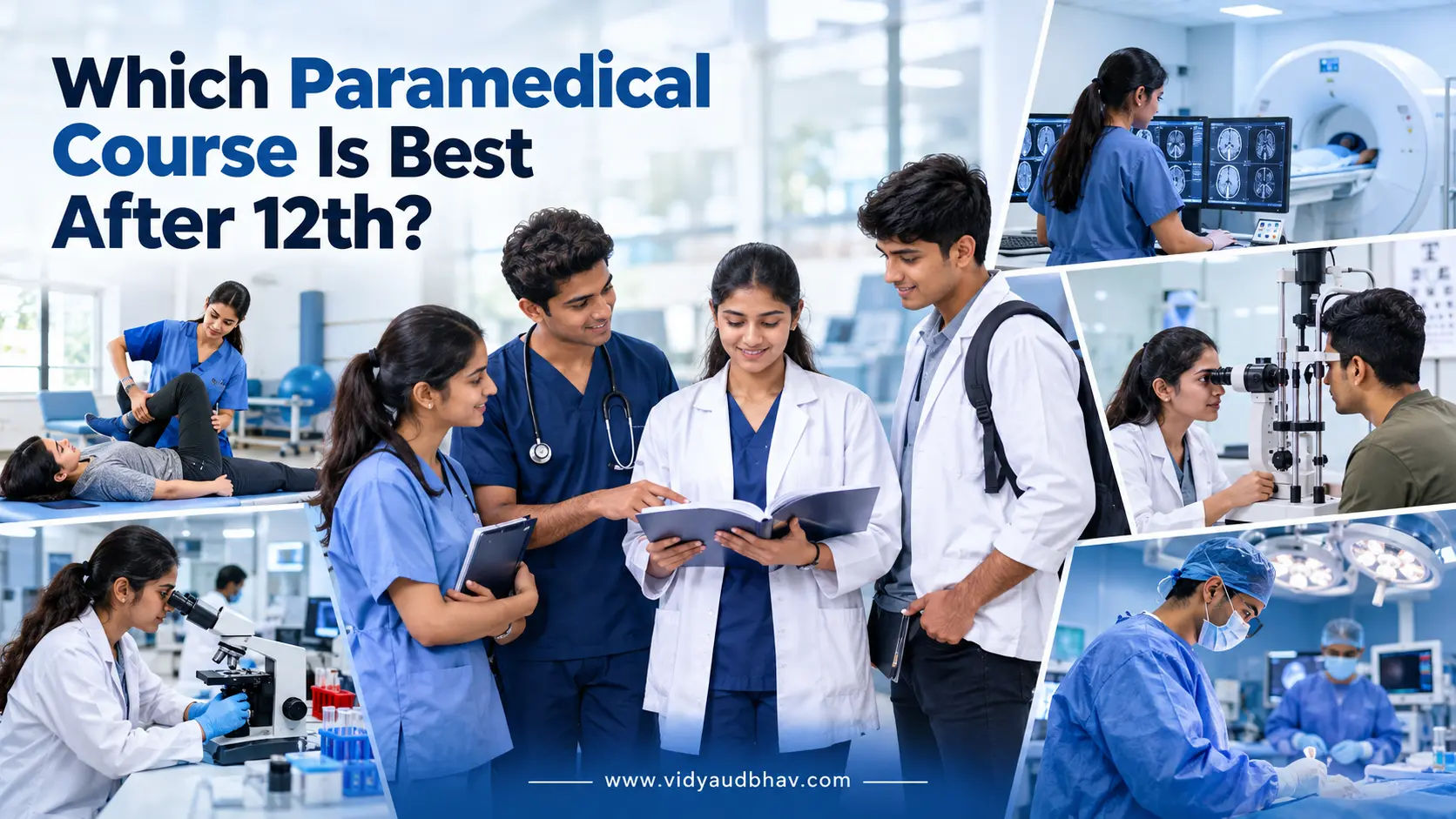
Popular options include Bachelor of Physiotherapy (BPT), B.Sc. Medical Laboratory Science, B.Sc. Radiology or Medical Imaging Technology, B.Sc. Optometry, Operation Theatre Technology, Anaesthesia Technology, and other allied healthcare programs.
If you are confused about which direction suits you, this guide will help you compare the major options and make a more informed career decision.
What Is a Paramedical Course?
Paramedical and allied healthcare courses prepare students for specialised roles that support diagnosis, treatment, rehabilitation, patient care, and healthcare operations.
Depending on the specialisation, professionals may work with patients directly, operate medical equipment, perform laboratory testing, assist healthcare teams, or provide rehabilitation services.
Some courses are diploma-level programs, while others lead to undergraduate degrees. Eligibility and course duration can also vary between institutions and countries.
For students after 12th, choosing a recognised program with practical and clinical training is particularly important.
Which Paramedical Course Is Best After 12th?
The answer depends on what type of healthcare work you prefer.
| BPT | Physiotherapy | Rehabilitation, movement, sports, patient care | Bachelor's |
| B.Sc. Medical Laboratory Science | Diagnostics | Laboratory testing and science | Bachelor's |
| B.Sc. Radiology / Medical Imaging | Medical imaging | Technology, X-ray, CT and MRI | Bachelor's |
| B.Sc. Optometry | Eye care | Vision and eye health | Bachelor's |
| Operation Theatre Technology | Surgical support | Hospitals and surgical environments | Diploma/Bachelor's |
| Anaesthesia Technology | Anaesthesia support | Critical hospital procedures | Diploma/Bachelor's |
| Healthcare Management | Healthcare administration | Management and hospital operations | Bachelor's |
Rather than choosing a course simply because it is popular, compare the actual work involved with your strengths and interests.
1. Bachelor of Physiotherapy
Bachelor of Physiotherapy (BPT) is a strong option for students interested in rehabilitation, physical movement, sports injuries, pain management, and patient interaction.
Physiotherapists may work with people recovering from injuries, surgeries, neurological conditions, mobility problems, or physical disabilities.
Who Should Choose BPT?
BPT may suit you if you:
- Enjoy biology and healthcare.
- Like practical work
- Are comfortable interacting with patients
- Have an interest in fitness or sports.
- Want a rehabilitation-focused career.
- Have patience and good communication skills
Students can later explore areas such as orthopaedic, neurological, sports, paediatric, cardiopulmonary, or geriatric physiotherapy.
For more information, explore the physiotherapy career guide and physiotherapy college selection resources on Vidya Udbhav.
2. B.Sc. Medical Laboratory Science
If you enjoy science, laboratory work, analysis, and accuracy, Medical Laboratory Science can be an interesting healthcare pathway.
Laboratory professionals work with samples such as blood, urine, tissue, and other biological materials. Their work supports the diagnosis and monitoring of many medical conditions.
Career environments can include:
- Hospitals
- Diagnostic laboratories
- Research laboratories
- Public health facilities
- Biotechnology organizations
- Pharmaceutical companies
This option may be particularly suitable for students who prefer technical and analytical work over continuous patient interaction.
3. B.Sc. Radiology and Medical Imaging
Students interested in healthcare and technology often consider Radiology and Medical Imaging Technology.
Depending on the program, students may learn about imaging systems and clinical procedures associated with technologies such as X-ray, CT, MRI, and other diagnostic imaging equipment.
A key point is to understand the difference between a radiologist and a radiology technologist or technician. A radiologist is a medical doctor who specialises in interpreting medical images, while imaging professionals are trained for technical and clinical support roles.
For students after 12th, undergraduate imaging programs can provide a structured route into the allied healthcare sector.
4. B.Sc. Optometry
If you are interested in eye care and vision science, B.Sc. Optometry can be another option.
Optometry combines healthcare, diagnostic procedures, vision science, and patient interaction. Depending on local regulations and professional scope, optometry graduates can work in eye-care settings, optical practices, hospitals, and other healthcare environments.
This field can be attractive for students who want a healthcare career involving both technology and direct patient care.
Before applying, check the exact eligibility, professional scope, internship structure, and recognition requirements of the institution.
5. Operation Theatre Technology
Operation Theatre Technology is designed for students who are comfortable working in hospital environments and are interested in surgical procedures.
Students may learn about:
- Operation theatre preparation
- Surgical instruments
- Sterilization procedures
- Infection prevention
- Patient preparation
- Assistance during surgical procedures
This can be demanding work because operating theatres require concentration, discipline, teamwork, and strict safety procedures.
6. Anaesthesia Technology
Anaesthesia technology is another specialised healthcare pathway.
Professionals in this area support anaesthesia teams and help prepare equipment and patients during procedures. Because the work is closely connected with surgical and critical-care environments, students need strong attention to detail and the ability to work calmly in clinical situations.
Course names, eligibility, and professional responsibilities can differ between institutions and countries, so students should verify the current curriculum before admission.
How to Choose the Right Paramedical Course After 12th
Here is what actually works: start with the type of work you want to do, not the course name.
Step 1: Identify Your Strong Subjects
If you enjoy biology and patient interaction, physiotherapy or optometry may interest you.
If you prefer laboratory science, Medical Laboratory Science may be more suitable.
If you enjoy technology and medical equipment, medical imaging could be worth exploring.
Step 2: Decide How Much Patient Interaction You Want
Ask yourself whether you want to:
- Work directly with patients.
- Work mainly in laboratories.
- Operate healthcare technology
- Assist surgical teams
- Work in rehabilitation
- Combine healthcare with administration.
This simple question can eliminate several unsuitable options.
Step 3: Compare Course Duration and Cost
Do not compare only tuition fees.
Also consider:
- Internship requirements
- Clinical exposure
- Laboratory facilities
- Hospital partnerships
- Hostel and living costs
- Additional training
- Future postgraduate options
A cheaper course is not automatically the better choice if practical exposure is limited.
Step 4: Check Recognition and Training
One thing many beginners miss is the importance of institutional recognition and practical training.
Before admission, verify the institution, curriculum, clinical training, internship structure, and applicable professional or regulatory requirements.
Benefits of Choosing a Paramedical Career
Paramedical and allied healthcare careers can offer several pathways.
Multiple Specializations
Healthcare is not limited to doctors and nurses. Diagnostic, rehabilitation, imaging, eye care, surgical support, laboratory, and other specialised fields create different career routes.
Practical Learning
Many programs involve laboratory, clinical, or practical components rather than only classroom study.
Different Work Environments
Depending on your specialisation, you may work in hospitals, diagnostic centres, rehabilitation facilities, laboratories, clinics, research environments, or healthcare organisations.
Further Education
After an undergraduate qualification, students may explore postgraduate study, specialisation, research, teaching, healthcare management, or related fields.
Challenges Students Should Know
A healthcare career can be rewarding, but it is not effortless.
Students should be prepared for:
- Practical and clinical training
- Long periods of focused work
- Continuous learning
- Patient responsibility
- Competitive employment markets
- Different licensing or registration requirements
- Potentially modest starting salaries in some roles
Here is where many people make mistakes: they choose a course based only on salary advertisements without understanding the actual responsibilities.
Beginner Strategy: What Should You Do After 12th?
If you are still confused, use this simple approach.
Interest → Eligibility → Course → Institution → Practical Training → Career Path
For example:
Interested in rehabilitation → Check BPT eligibility → Compare recognised colleges → Evaluate clinical exposure → Explore physiotherapy careers.
Similarly:
Interested in diagnostics → Explore Medical Laboratory Science → Compare laboratory facilities → Check internship opportunities → Plan your career specialisation.
This approach is more useful than searching for a single “best” course.
Advanced Strategy for Better Career Growth
Your degree is only the beginning.
Students can strengthen their career prospects by developing:
- Communication skills
- Clinical knowledge
- Digital healthcare skills
- Professional English
- Documentation skills
- Research ability
- Patient-handling skills
- Technology awareness
Internships and practical exposure can also help students understand whether they genuinely enjoy their chosen specialisation.
Common Mistakes to Avoid
Choosing Because Friends Are Choosing It
Your friend's career goals may be completely different from yours.
Looking Only at Salary
Salary varies by location, experience, employer, qualification, and specialisation.
Ignoring Practical Training
Healthcare is a practical profession. Clinical exposure matters.
Selecting a College Without Research
Check recognition, faculty, infrastructure, hospital exposure, internship opportunities, fees, and student support.
Assuming Every Course Has the Same Eligibility
Eligibility can differ between institutions and programs. Always verify current admission requirements before applying.
Tools and Resources for Students
You can use simple tools to organise your research:
Beginner-friendly: Google Sheets, Canva, Notion
Free learning options: YouTube, SWAYAM
Professional research: Google Scholar, institutional course catalogues
The important thing is not how many tools you use. It is whether you verify information before making an academic decision.
Future Trends in Paramedical Careers
Healthcare is becoming increasingly technology-driven.
Medical imaging, digital diagnostics, laboratory automation, rehabilitation technology, telehealth, preventive healthcare, and data-supported clinical services are changing how healthcare teams operate.
Artificial intelligence is also becoming relevant in areas such as medical imaging and laboratory workflows. However, technology is more likely to change professional roles and workflows than simply eliminate the need for trained healthcare workers.
For students, this means technical knowledge should be combined with communication, practical skills, adaptability, and lifelong learning.
A Simple Decision Guide
If you are still asking “which paramedical course is best after 12th?”, start here:
- Love rehabilitation, movement and sports? → Explore BPT.
- Prefer laboratory work and diagnostics? → Explore Medical Laboratory Science.
- Enjoy healthcare technology and imaging? → Explore Radiology or Medical Imaging.
- Interested in eye care? → Explore Optometry.
- Interested in surgical environments? → Explore Operation Theatre Technology.
- Interested in anaesthesia and perioperative care? → Explore Anaesthesia Technology.
- Interested in administration and healthcare operations? → Explore Healthcare Management.
For broader planning, students can also explore the career planning resources available through Vidya Udbhav.
Expert Tips Before Taking Admission
Before paying an admission fee, ask these questions:
- Is the institution properly recognised?
- What is the exact eligibility requirement?
- What is the complete course duration?
- Does the course include clinical or practical training?
- Which hospitals or laboratories are associated with the program?
- What are the total fees?
- What postgraduate options are available?
- What professional registration or licensing rules apply?
- What type of jobs can graduates actually pursue?
- Does the course match your interests and working style?
Do not rush this decision because someone says a particular course is “the best.”
Frequently Asked Questions
Which is the best paramedical course after 12th?
There is no universally best paramedical course. BPT, Medical Laboratory Science, Radiology and Medical Imaging, Optometry, Operation Theatre Technology, and other programs suit different interests and career goals.
Which paramedical course has good career scope?
Career scope depends on the specialisation, qualification, practical skills, location, employer, and professional requirements. Healthcare diagnostics, rehabilitation, imaging, laboratory science, and eye care are among the areas students commonly explore.
Can I pursue paramedical courses after 12th Science?
Yes, many undergraduate paramedical and allied healthcare programs accept students from the Science stream. However, subject requirements and minimum marks vary by course and institution.
Is BPT a paramedical course?
BPT is generally considered part of the allied healthcare/healthcare professions rather than being identical to every traditional paramedical program. It prepares students for professional physiotherapy practice.
Which is better: BPT or B.Sc. Radiology?
Neither is automatically better. BPT focuses on rehabilitation and physical care, while radiology and medical imaging focus on diagnostic imaging technology. Your interests should guide the choice.
Can paramedical students study further after graduation?
Yes. Depending on the discipline, graduates may pursue master's programs, specialisation, research, teaching, healthcare management, or other advanced qualifications.
Can paramedical professionals work abroad?
International opportunities can exist, but requirements vary significantly by profession and country. Students should check qualification recognition, registration, licensing, language requirements, and immigration rules for their intended destination.
Final Advice
Choosing a paramedical course after 12th should be treated as a career decision, not simply an admission decision.
Start by understanding yourself: What subjects do you enjoy? Do you prefer patients, laboratories, technology, rehabilitation, or surgical environments? How much practical work are you comfortable with?
Then compare courses, institutions, recognition, clinical exposure, fees, and long-term opportunities.
The right course is the one that fits your abilities, interests, and career direction.
If you are still uncertain, structured career counselling can help you compare options before committing to a degree. Vidya Udbhav provides educational and career guidance for students exploring healthcare and other professional pathways.